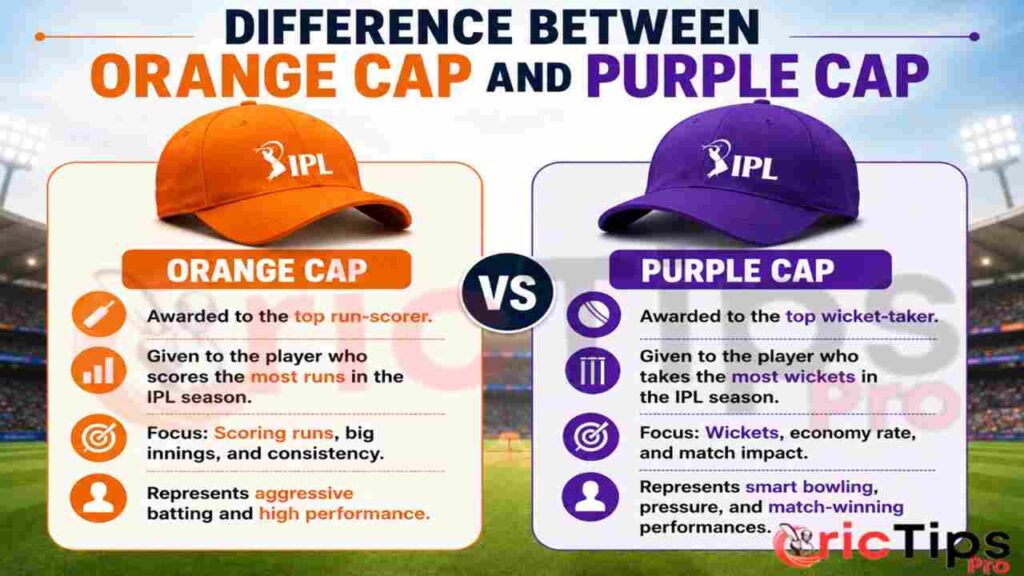
In the Indian Premier League (IPL), fans always talk about exciting things like which team will win, who will score the most runs, and who will take the most wickets. Among all these discussions, one topic always gets special attention: the Orange Cap and the Purple Cap. Many people still want to know the difference between orange cap and purple cap in simple words.
The answer is very easy.
The Orange Cap is given to the batsman who scores the highest number of runs in the IPL season.
The Purple Cap is given to the bowler who takes the highest number of wickets in the season.
So, one cap is for the best batsman, while the other cap is for the best bowler.
During the IPL season, these two caps often change from one player to another after different matches. One day a player may lead the runs chart, and the next day another player may go ahead. That is why fans always keep an eye on who is wearing the Orange Cap and who is holding the Purple Cap.
What Is the Orange Cap and Why Is It So Important in the IPL?
In the IPL, the Orange Cap is one of the biggest awards for a batsman. This award has been given since the tournament started in 2008. The player who scores the most runs in the full season wins the Orange Cap. This is also the easiest way to understand the difference between orange cap and purple cap.
During the tournament, the batsman who stays at the top of the run list gets to wear the Orange Cap on the field. So fans can quickly see who is leading the race for most runs.
But winning the Orange Cap is not only about playing one big innings. A player has to perform well throughout the season. Sometimes a quick 30 helps the team, sometimes a strong 50, and sometimes a brilliant century. All these innings together help a player move closer to the Orange Cap.
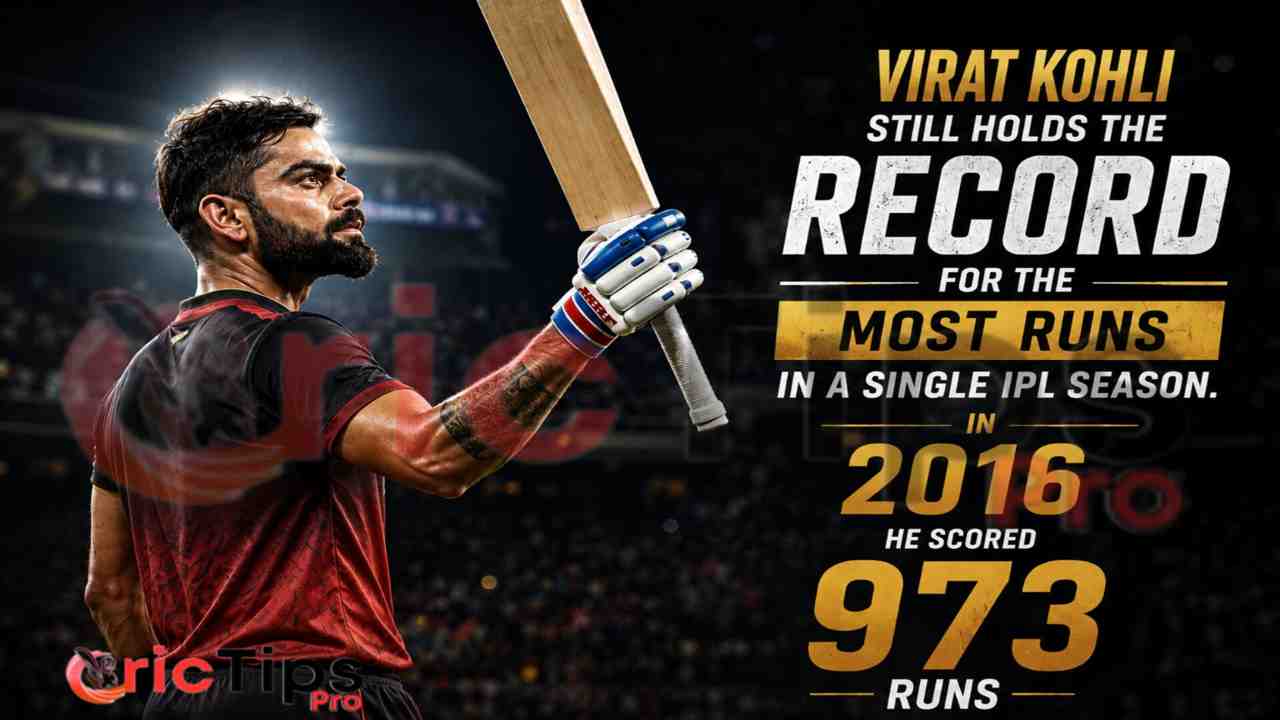
Virat Kohli still holds the record for the most runs in a single IPL season. In 2016, he scored 973 runs, and that record is still very special for cricket fans. David Warner has also won the Orange Cap multiple times, which shows how consistent he has been in the IPL over the years.
If two batsmen finish with the same number of runs, then the player with the better strike rate gets the higher position. That is why scoring runs quickly is also very important in T20 cricket.
What Is the Purple Cap and Why Is It So Special for Bowlers?
Just like the Orange Cap is a big award for batsmen, the Purple Cap is one of the biggest awards for bowlers in the IPL. The bowler who takes the most wickets in the full season wins the Purple Cap. This is another simple way to understand the difference between orange cap and purple cap.
In cricket, batsmen usually get more attention because people enjoy watching fours and sixes. But one important wicket can completely change a match. That is why the Purple Cap is also very valuable in the IPL.
When a bowler stays at the top of the wicket-taking list, he wears the Purple Cap during matches. This helps fans easily know who is leading the tournament in wickets at that moment.
Dwayne Bravo and Harshal Patel both took 32 wickets in a single IPL season and created a big record in Purple Cap history. Bhuvneshwar Kumar also made history by winning the Purple Cap in two back-to-back seasons.
If two bowlers finish with the same number of wickets, then the bowler with the better economy rate moves ahead. That means giving away fewer runs is also very important, not just taking wickets.
What Is the Real Difference Between Orange Cap and Purple Cap?
Many people think both caps are just IPL awards, but the difference between orange cap and purple cap is actually very simple. One is for batting, and the other is for bowling.
The Orange Cap is given for scoring the most runs. A batsman’s main goal is to score as many runs as possible for the team.
On the other hand, the Purple Cap is given for taking the most wickets. A bowler’s job is to get batsmen out and stop runs.
There is also a big difference in how fans see these two awards. Usually, the Orange Cap gets more attention because people enjoy watching big shots and boundaries. But many cricket experts believe winning the Purple Cap is also very difficult because a bowler has to perform well in almost every match.
The Orange Cap is often seen as a sign of aggressive batting. The Purple Cap, however, shows smart bowling, creating pressure, and taking important wickets at the right time.
Both awards are very important in cricket. Because without runs a team cannot win, and without wickets a team cannot stop the opposition. That is why batting and bowling together make cricket exciting.
Why Are Orange Cap and Purple Cap So Popular in IPL?
Today, IPL is not just a cricket tournament, it is an emotion for millions of fans. That is why the Orange Cap and Purple Cap have become very popular over the years. Many fans also want to know the difference between orange cap and purple cap and which award is more important.
When a batsman walks onto the field wearing the Orange Cap, everyone expects a big innings from him. In the same way, fans also expect important wickets from the bowler wearing the Purple Cap.
The most exciting part is that this race continues until the last match of the season. Sometimes a batsman wins the Orange Cap at the final moment, while sometimes a bowler grabs the Purple Cap with a brilliant performance in the playoffs.
In simple words, the Orange Cap is for the best run scorer, and the Purple Cap is for the best wicket taker in the IPL. Both awards make the tournament even more exciting every year.
What is the main difference between Orange Cap and Purple Cap in IPL?
The Orange Cap is awarded to the player who scores the most runs in an IPL season, while the Purple Cap is given to the bowler who takes the most wickets in the tournament.
Who wears the Orange Cap during the IPL season?
The batsman who is leading the run-scoring chart during the tournament wears the Orange Cap on the field until another player scores more runs.
How is the Purple Cap winner decided in IPL?
The Purple Cap is awarded to the bowler who finishes the IPL season with the highest number of wickets. If two bowlers have the same wickets, the better economy rate is considered.
Who has scored the most runs and taken the most wickets in a single IPL season?
Virat Kohli holds the record for the most runs in a single IPL season with 973 runs in 2016. Dwayne Bravo and Harshal Patel share the record for most wickets in one IPL season with 32 wickets each.