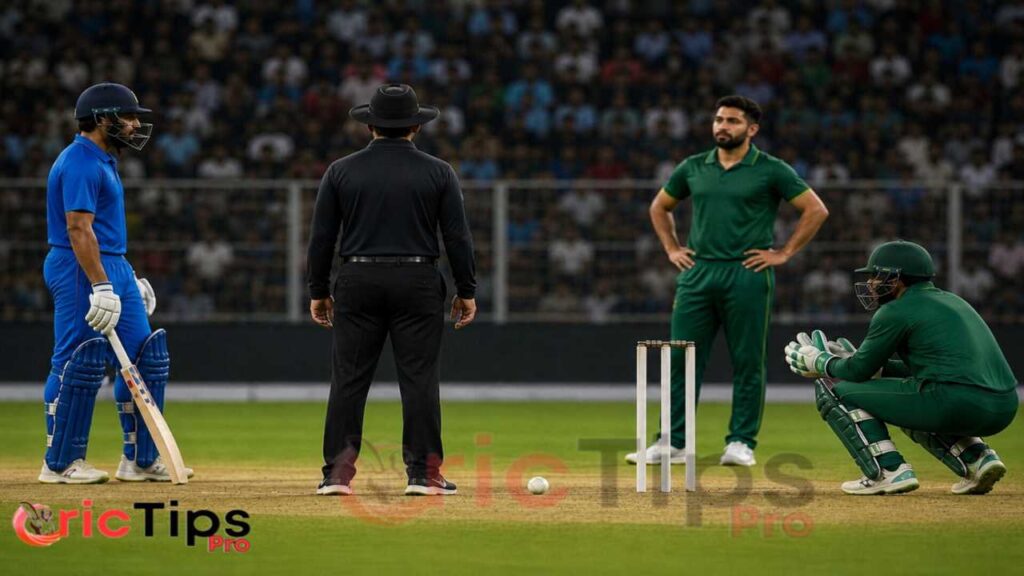
In cricket and many other sports, the term dead ball is very important, but it can sometimes confuse people.
In simple words, a dead ball means a moment when the ball is no longer active in the game. During this time, no runs can be scored and no important action can happen.
This idea is not only used in cricket it can also be seen in games like football, baseball, and basketball. However, in cricket, it is used more clearly and more often.In cricket, a dead ball means that a particular moment of play has ended temporarily. Everything pauses no action, no movement that counts. After that, the game starts fresh again with the next delivery.
Dead Ball in Cricket – Real Meaning in the Game
In cricket, a dead ball means the moment when the ball is no longer in play or when all action has stopped. For example, when the ball finally settles like when it is safely in the hands of the bowler, wicketkeeper, or a fielder it is called a dead ball. Nothing more can happen from that delivery. Also, if a batsman gets out, or if the ball goes outside the boundary, that ball automatically becomes dead.
This rule helps keep the game clear, fair, and well-structured. Every delivery in cricket has a clear beginning and a clear ending and that ending moment is what we call a dead ball.
Why is the Dead Ball Rule So Important?
Many people think that a dead ball is just a technical rule. But in reality, it is one of the main reasons why cricket stays organized and smooth. If there were no dead ball rule, it would be very confusing to understand when one action ends and the next one begins. Once you clearly understand what a dead ball is, you also start to see how well-structured cricket really is as a game.This rule makes sure that after every delivery, there is a short pause or reset. This gives players time to get ready again and helps umpires make the right decisions.
In the end, the dead ball rule makes cricket fair, clear, and easy to follow for everyone.
When is a Dead Ball Declared in Cricket?
In cricket, a dead ball is called in different situations, and understanding these moments helps you follow the game more clearly. For example, when the ball touches the bat and slowly reaches the wicketkeeper, and no run is taken, the play quietly comes to an end. That moment is called a dead ball. If a batsman gets out, the action of that delivery immediately stops, and the ball becomes dead. When the ball crosses the boundary for a four or a six, it also becomes dead right away, as the result is already decided.
Sometimes, the umpire calls Time like when a player is injured or rain interrupts the game. In such moments, the ball is also declared dead.All these situations show one simple thing: the dead ball rule is what gently controls the flow of the game. It creates clear endings, allowing the match to move forward in an organized and fair way.
Dead Ball vs Live Ball – What’s the Difference?
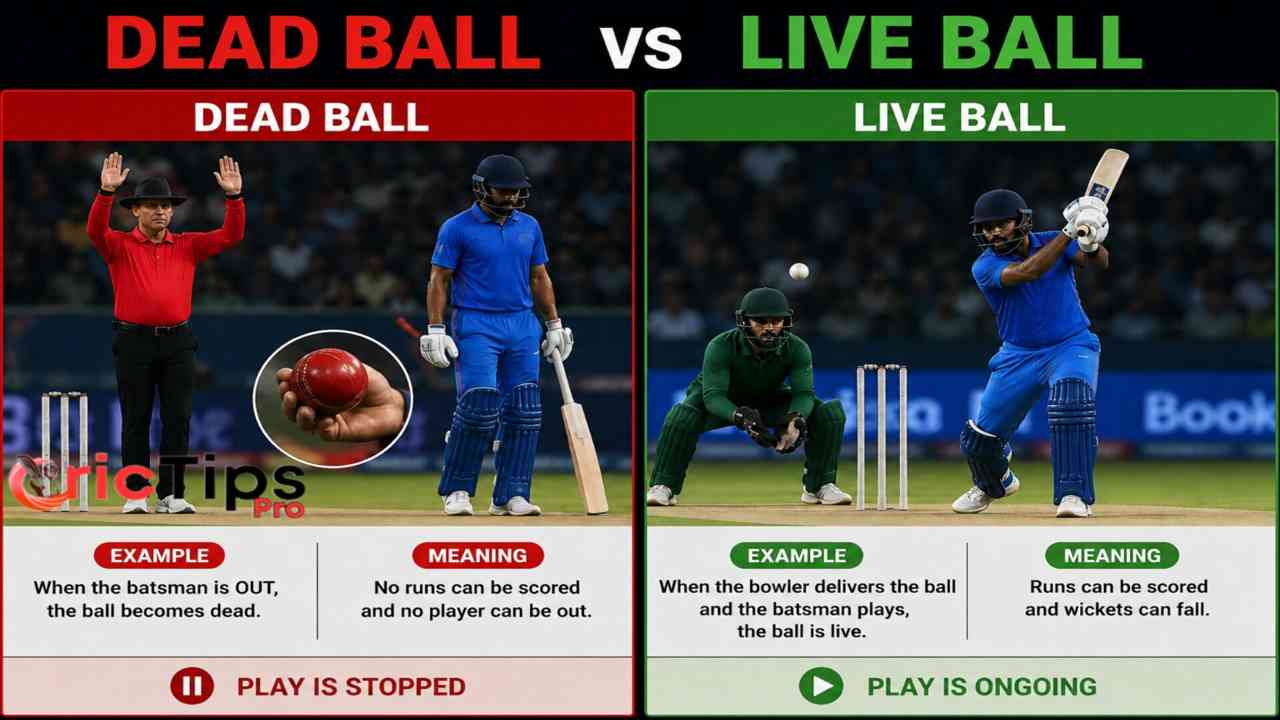
In cricket, understanding the difference between a dead ball and a live ball is very important. A live ball is the moment when the game is fully active. The batsman can score runs, get out, and the match feels full of energy and excitement. But when the ball becomes dead, everything stops. No runs can be taken, and no player can be out. It is a quiet pause in the game. This difference is what creates the natural rhythm of cricket. On one side, there is action and intensity; on the other, there is a calm pause. And it is this balance between movement and stillness that makes cricket feel so beautiful and enjoyable to watch.
So, dead ball is not just a rule, it is an important part of the game’s flow and feeling.
Conclusion
In the end, we can say that even though dead ball is a small term, its importance in cricket is very big. It separates every moment of the game and makes sure there is no confusion. Because of this, the game feels clear and easy to follow.
If you understand dead ball in cricket, many of the game’s tricky parts suddenly become simple. This is especially helpful for new viewers who are still learning the game.
Cricket is not just about bat and ball it is a beautiful balance of rules, timing, and control. And the dead ball is an important part of that balance.
What is a dead ball in cricket?
A dead ball in cricket means the ball is no longer in play. No runs can be scored, and no player can be out during this time.
When is a dead ball called in cricket?
A dead ball is called when the action of the ball is complete, such as when the ball reaches the wicketkeeper, a batsman is out, or the ball goes to the boundary.
What is the difference between dead ball and live ball in cricket?
A live ball is when the game is active and runs or wickets can happen. A dead ball is when the game is paused and no action is possible.
Can a batsman score runs on a dead ball?
No, a batsman cannot score any runs on a dead ball because the ball is not in play.
What is a dead ball in cricket?
A dead ball in cricket means the ball is no longer in play. No runs can be scored, and no player can be out during this time.
When is a dead ball called in cricket?
A dead ball is called when the action of the ball is complete, such as when the ball reaches the wicketkeeper, a batsman is out, or the ball goes to the boundary.
What is the difference between dead ball and live ball in cricket?
A live ball is when the game is active and runs or wickets can happen. A dead ball is when the game is paused and no action is possible.
Can a batsman score runs on a dead ball?
No, a batsman cannot score any runs on a dead ball because the ball is not in play.