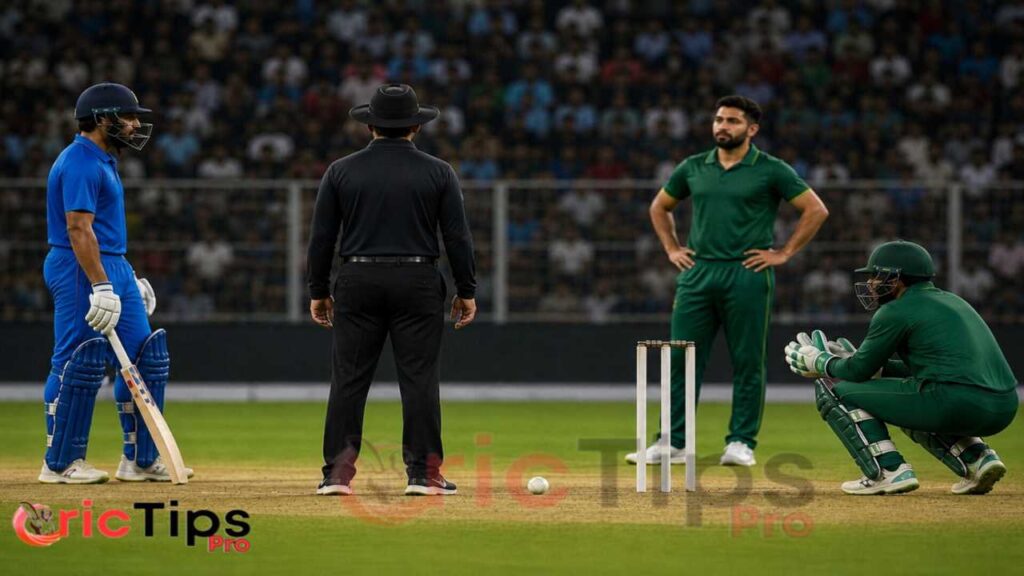
In cricket and many other sports, the term dead ball is very important, but it can sometimes confuse people.
In simple words, a dead ball means a moment when the ball is no longer active in the game. During this time, no runs can be scored and no important action can happen.
This idea is not only used in cricket it can also be seen in games like football, baseball, and basketball. However, in cricket, it is used more clearly and more often.In cricket, a dead ball means that a particular moment of play has ended temporarily. Everything pauses no action, no movement that counts. After that, the game starts fresh again with the next delivery.
Dead Ball in Cricket – Real Meaning in the Game
Dead Ball is a fundamental rule of cricket that determines when a ball is officially out of play. As soon as a dead ball is declared, all the activities of that delivery are completed. After that, no runs can be scored, no wickets fall and no new changes are made to the result of the match. This rule is governed by MCC Law 20 and plays an important role in maintaining transparency and fairness of the game by avoiding confusion on the field. Simply put, the ball is considered a live ball after the bowler starts the run-up, and in certain circumstances it becomes a dead ball.
A ball is usually a dead ball in two ways. The first is an automatic dead ball, where the ball goes out of play without a separate declaration by the umpire. For example, if the ball comes completely under the control of the wicketkeeper, bowler or any fielder, if the batter is out, if it is a boundary (four or six), if the ball gets stuck in the clothes or equipment of the batter or umpire or if it hits the helmet of the fielding side kept on the field, the ball automatically becomes a dead ball.
The second is an umpire called dead ball. If a player is seriously injured, if the batter is bowled when he is not ready, if the bowler accidentally drops the ball, if there is a spectator, animal or other external interference on the field or if the ball collides with the spidercam or wire, the umpire immediately declares a dead ball. Similarly, if there is an unusual situation that could disrupt the fair play of the match, the umpire can stop the play and call a dead ball.
There are also some important situations to be aware of. If a fielder intercepts the bowler’s delivery before it reaches the batter, the umpire declares a no ball and a dead ball together and the ball is re-balled. Again, the ball must be completely dead before an over is completed, a session ends or a drinks break is declared. These rules ensure that the match is always conducted in a fair, safe and orderly manner according to the International Laws of Cricket.
Why is the Dead Ball Rule So Important?
Dead Ball is an important rule in cricket that ensures fairness, safety and fair play. As soon as the ball is declared dead, the game of that delivery ends. After that, no runs, wickets or extra results are counted. As a result, both teams get an equal opportunity and no party can take unfair advantage of misunderstandings or unforeseen circumstances.
Another major importance of this rule is to ensure the safety of the players. If a batter is not ready, if a bowler accidentally drops the ball, if there is an outside obstacle on the field or if a player is seriously injured, the umpire stops the game. This keeps the situation under control and the match can resume normally and safely.
Several discussed incidents in cricket history have also proven the importance of this law. Jonny Bairstow’s controversial stumping in the 2023 Ashes series and Ben Stokes’ overthrow in the 2019 World Cup final have shown that whether a ball is a Dead Ball or not according to the law can sometimes change the course of the match. So this is not just a simple rule; rather, it is one of the most important foundations of fair play in cricket, proper umpiring, and keeping every decision transparent and accurate.
When is a Dead Ball Declared in Cricket?
In cricket, a dead ball is called in different situations, and understanding these moments helps you follow the game more clearly. For example, when the ball touches the bat and slowly reaches the wicketkeeper, and no run is taken, the play quietly comes to an end. That moment is called a dead ball. If a batsman gets out, the action of that delivery immediately stops, and the ball becomes dead. When the ball crosses the boundary for a four or a six, it also becomes dead right away, as the result is already decided.
Sometimes, the umpire calls Time like when a player is injured or rain interrupts the game. In such moments, the ball is also declared dead.All these situations show one simple thing: the dead ball rule is what gently controls the flow of the game. It creates clear endings, allowing the match to move forward in an organized and fair way.
Dead Ball vs Live Ball – What’s the Difference?
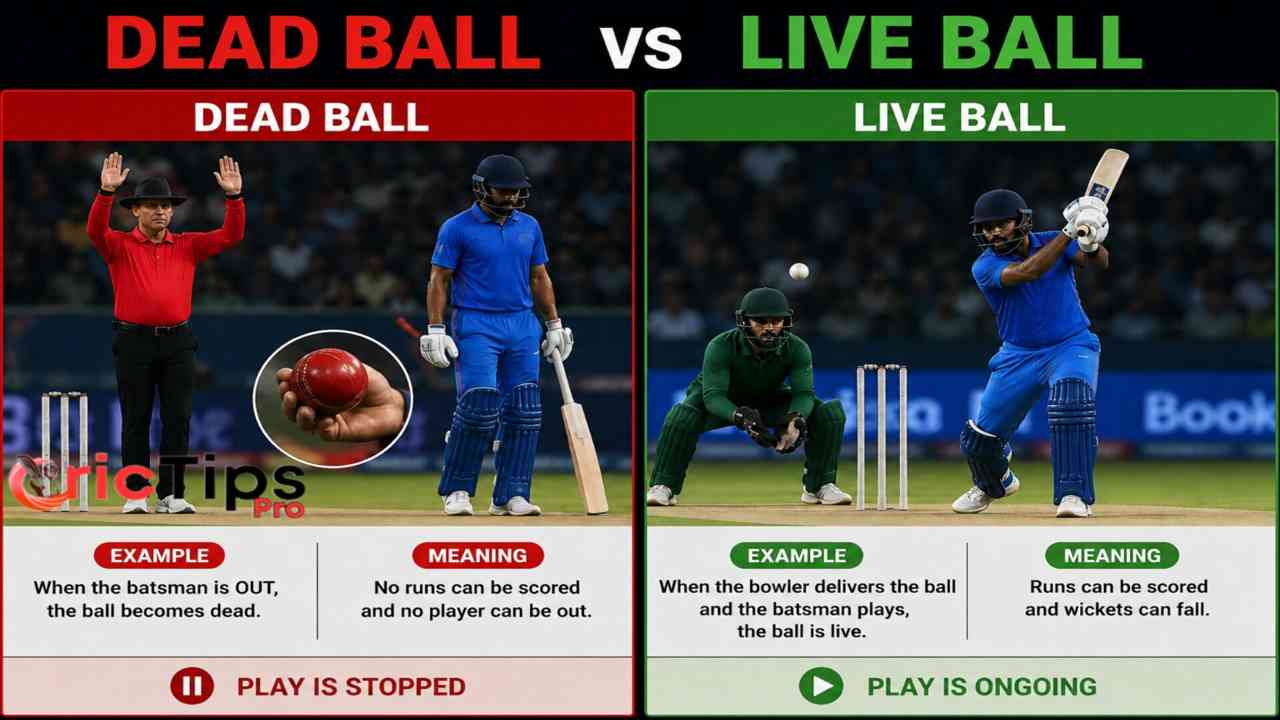
In cricket, Dead Ball and Live Ball are two different terms used to describe the same ball. A Live Ball begins when the bowler begins his run-up. At this time, the ball is fully in play and the batter can play shots, score runs, the fielding team can attempt Run Out, Catch or Stumping. In other words, every legal cricketing event in the match takes place in the Live Ball state.
On the other hand, Dead Ball is a state when the ball is no longer in play and all the proceedings of that delivery are officially over. After a Dead Ball is declared, no runs can be scored, no wickets fall and no new changes are added to the result of the match. This rule is governed by MCC Law 20 and ensures fair competition by avoiding confusion on the field.
A Live Ball usually becomes Dead Ball when the ball is completely under the control of the Wicketkeeper, Bowler or a Fielder, a Batter is Out, a Boundary (Four or Six) is scored or the Umpire stops play in any special situation and declares Dead Ball. For example, if a player is seriously injured, there is an external obstacle on the field, or if the batsman is not ready to bowl, the umpire can immediately call a dead ball.
Understanding the difference between these two conditions is very important to understand the laws of cricket. For example, in the 2023 Ashes series, there was a big controversy over Jonny Bairstow’s stumping. Bairstow thought the ball was a dead ball and left the crease. But wicketkeeper Alex Carey kept control of the ball and broke the stumps. Since the umpire still considered the ball to be a live ball, the stumping was declared valid. This incident clearly shows that even important moments of a match can be controversial if the difference between dead ball and live ball is not understood correctly.
In simple terms, live ball means that the game is in progress and every cricket action is legal, and dead ball means that the game is over for that delivery. Having a correct understanding of these two conditions makes it much easier to understand the rules of cricket, the umpire’s decisions, and the important moments of the match.
Conclusion
In the end, we can say that even though dead ball is a small term, its importance in cricket is very big. It separates every moment of the game and makes sure there is no confusion. Because of this, the game feels clear and easy to follow.
If you understand dead ball in cricket, many of the game’s tricky parts suddenly become simple. This is especially helpful for new viewers who are still learning the game.
Cricket is not just about bat and ball it is a beautiful balance of rules, timing, and control. And the dead ball is an important part of that balance.
What is a dead ball in cricket?
A dead ball in cricket means the ball is no longer in play. No runs can be scored, and no player can be out during this time.
When is a dead ball called in cricket?
A dead ball is called when the action of the ball is complete, such as when the ball reaches the wicketkeeper, a batsman is out, or the ball goes to the boundary.
What is the difference between dead ball and live ball in cricket?
A live ball is when the game is active and runs or wickets can happen. A dead ball is when the game is paused and no action is possible.
Can a batsman score runs on a dead ball?
No, a batsman cannot score any runs on a dead ball because the ball is not in play.