
Cricket has produced countless legends over the years. Some earned their place in history through remarkable batting records, while others became famous for their extraordinary bowling achievements. However, only a handful of people have managed to become global cricket icons without scoring a century or taking a wicket.
One of those rare personalities is Billy Bowden umpire, a man who transformed cricket officiating into something fans genuinely looked forward to watching. Known for his famous “Crooked Finger of Doom,” entertaining boundary signals, and unique personality, Bowden became one of the most recognizable faces in world cricket.
Yet behind the laughter and unforgettable gestures lies a story of resilience, determination, and courage. His journey is not simply about umpiring cricket matches. It is about overcoming adversity, adapting to life’s challenges, and turning personal pain into professional success.
Early Life and Passion for Cricket
Before becoming an international umpire, Billy Bowden was a young cricket enthusiast growing up in New Zealand. Like many aspiring cricketers, he dreamed of representing his country and building a successful playing career.
Fast bowling was his specialty, and he spent countless hours improving his skills. Cricket was more than a hobby for him—it was his passion and his future ambition.
During his younger years, Bowden showed enough talent to believe that a professional cricket career was within reach. He enjoyed the competitive nature of the sport and worked hard to improve his performance.
However, life had different plans.
A Life-Changing Diagnosis
At a relatively young age, Bowden received devastating news. He was diagnosed with rheumatoid arthritis, a chronic autoimmune disease that causes inflammation, stiffness, and severe pain in the joints.
The diagnosis dramatically changed his life.
The condition made physical activity increasingly difficult. Training sessions became painful, and the demands of competitive cricket were no longer easy to manage. What had once seemed like a promising playing career suddenly appeared impossible.
Years later, Bowden described the illness as a lifelong challenge. The pain affected not only his sporting ambitions but also many aspects of his daily life.
For most athletes, such a diagnosis would have marked the end of their connection with professional sport.
Fortunately, Bowden refused to give up.
Discovering a New Path
Although his dream of becoming a successful player had faded, Bowden still loved cricket deeply. Walking away from the game was never an option.
Instead, he searched for another way to remain involved in the sport.
That search eventually led him toward umpiring.
At the time, few people viewed umpiring as a glamorous profession. Umpires often worked behind the scenes, receiving little attention unless controversy occurred.
Nevertheless, Bowden embraced the role wholeheartedly.
He studied the laws of cricket, developed his decision-making skills, and worked tirelessly through New Zealand’s domestic cricket structure. His dedication and professionalism quickly earned respect among players and administrators.
What began as an alternative career soon became a calling.
The Rise of Billy Bowden Umpire
The reputation of Billy Bowden umpire steadily grew throughout the 1990s. His understanding of cricket, combined with his calm approach under pressure, helped him progress rapidly through the officiating ranks.
In 1993, he made his first-class umpiring debut, marking an important milestone in his new cricketing journey.
Only two years later, in March 1995, he made his international debut as a television umpire during a One-Day International match between New Zealand and Sri Lanka in Hamilton.
For most officials, an international debut is a significant achievement. For Bowden, it was merely the beginning of a remarkable career that would eventually span decades.
At that stage, very few cricket fans knew his name.
That would soon change.
The Birth of the Crooked Finger of Doom
Every sporting personality has a signature moment or trademark feature that fans instantly recognize.
For Billy Bowden, it was a finger.
Traditionally, cricket umpires raise a straight index finger when declaring a batter out. However, Bowden’s arthritis made that motion difficult and uncomfortable.
Rather than trying to imitate others, he adapted.
He began raising a bent finger instead.
Initially, the gesture was simply a practical solution to a physical limitation. Over time, however, it evolved into one of the most famous umpiring signals in cricket history.
Fans affectionately nicknamed it the “Crooked Finger of Doom.”
Television audiences loved it.
Commentators talked about it.
Children copied it while playing cricket in parks and backyards.
The signal became a global trademark and helped distinguish Bowden from every other umpire in the game.
Most importantly, it demonstrated his ability to transform a challenge into an opportunity.
Bringing Entertainment to Umpiring
The crooked finger was only the beginning.
Bowden soon developed a variety of memorable signals that reflected his personality and creativity.
His boundary-four signal featured an exaggerated sweeping motion that looked as though he were brushing crumbs off a table.
His six signal often involved a playful hop before raising both arms dramatically above his head.
Even routine decisions seemed more entertaining when Bowden was officiating.
His style divided opinion in some traditional cricket circles. Critics argued that umpires should remain invisible and avoid drawing attention to themselves.
Fans felt differently.
Crowds around the world enjoyed his unique approach because it added character and enjoyment to the game without undermining his professionalism.
Bowden proved that an umpire could be both entertaining and highly competent.
Excellence Beyond the Showmanship
While spectators focused on his gestures, cricket administrators paid attention to something equally important—his performance.
The success of Billy Bowden umpire was never based solely on entertainment value.
He was respected for his strong understanding of cricket laws, accurate decision-making, and ability to handle pressure in high-profile matches.
His performances consistently met the standards required at the highest level of international cricket.
As a result, he earned increasing responsibility and recognition throughout his career.
In 2003, he achieved one of the biggest milestones available to any cricket official when he was appointed to the Emirates Elite Panel of ICC Umpires.
This prestigious appointment confirmed his status as one of the world’s leading cricket umpires.
It also proved that his popularity was backed by genuine professional excellence.
Historic Career Achievements
Throughout his international career, Bowden accumulated an impressive list of achievements.
He officiated in more than 100 Test matches, placing him among the most experienced umpires of his era.
In addition, he stood in hundreds of One-Day Internationals and numerous T20 International matches.
Throughout his career, Billy Bowden umpire earned admiration not only for his personality but also for his consistency and reliability during major international contests.
One particularly notable achievement came in January 2007 when he became the youngest umpire to officiate in 100 One-Day Internationals.
The milestone highlighted both his experience and the confidence that cricket authorities placed in him.
Even after decades in the sport, Bowden continued reaching new landmarks and contributing to cricket at the highest level.
Standing in Cricket History
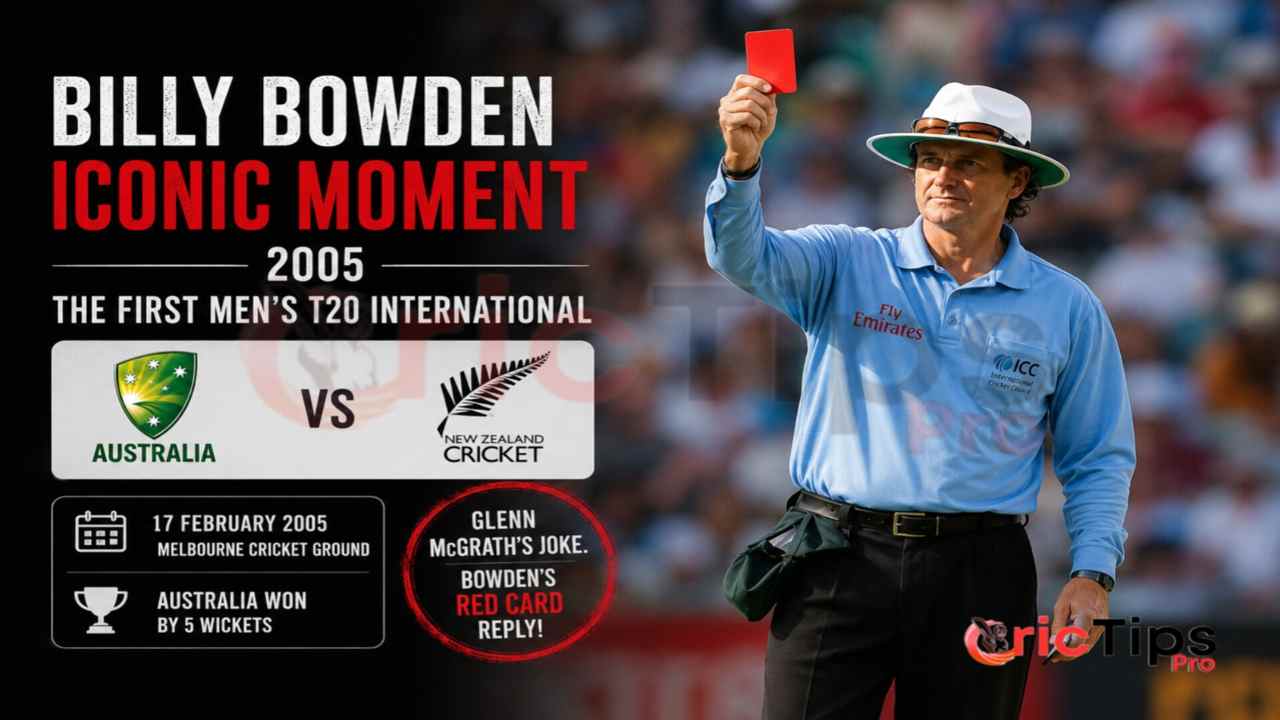
One of the most significant moments in Bowden’s career arrived in 2005.
That year, Australia and New Zealand contested the first-ever men’s Twenty20 International match.
At the time, nobody could predict how influential the format would eventually become.
Today, T20 cricket is one of the sport’s most popular formats worldwide.
Bowden had the privilege of standing in the middle during its historic beginning.
The presence of Billy Bowden umpire in that groundbreaking match added another memorable chapter to his already impressive career.
The game also produced one of cricket’s most entertaining moments.
When Australian fast bowler Glenn McGrath jokingly threatened an underarm delivery, Bowden responded by theatrically showing a football-style red card.
The crowd erupted with laughter.
The moment quickly became part of cricket folklore and remains one of the most memorable umpiring incidents ever witnessed.
The Legendary 2005 Ashes Series
Few cricket contests carry as much prestige as the Ashes.
The 2005 Ashes series between England and Australia is widely regarded as one of the greatest Test series ever played.
Every match was fiercely contested, and every decision carried enormous significance.
Bowden served as an on-field umpire during this historic series.
The pressure was immense, with millions of fans watching around the world.
Despite the intensity, he performed with the calm authority and professionalism that had become his trademark.
His selection for such an important series reflected the immense trust placed in him by cricket’s governing bodies.
Using Fame for a Greater Purpose
Bowden’s influence extended beyond cricket grounds.
Having personally experienced the challenges of rheumatoid arthritis, he became an advocate for greater awareness of the condition.
In 2006, he participated in campaigns designed to educate the public about arthritis and support those living with the disease.
Beyond cricket, Billy Bowden umpire used his public profile to inspire people facing physical challenges and demonstrate that setbacks do not have to define a person’s future.
His openness about his condition helped many individuals understand the realities of living with chronic pain.
This aspect of his legacy often receives less attention than his famous signals, yet it remains one of his most meaningful contributions.
Why Fans Still Love Billy Bowden
Years after many of his most famous matches, cricket supporters continue to remember Bowden fondly.
The reason is simple.
He brought joy to the sport.
While many officials are remembered only for controversial decisions, Bowden is remembered for his personality, authenticity, and passion.
He showed that professionalism does not require abandoning individuality.
He demonstrated that challenges can become strengths.
Most importantly, he reminded fans that sport should be enjoyable.
Whether it was the crooked finger, the sweeping boundary signal, or the playful hop for a six, his actions reflected a genuine love for cricket.
A Legacy That Goes Beyond Umpiring
The story of Billy Bowden is ultimately about resilience.
When illness ended one dream, he created another.
When physical limitations threatened to hold him back, he adapted and found a unique path forward.
His journey offers an important lesson for people both inside and outside sport: success is not always about avoiding obstacles. Sometimes, success comes from learning how to overcome them.
That is why Billy Bowden remains one of the most beloved figures in cricket history.
His legacy extends far beyond statistics and match records.
He transformed pain into inspiration, challenges into opportunities, and a routine officiating role into something unforgettable.
For cricket fans around the world, Billy Bowden will always be remembered not only as an outstanding umpire but also as a symbol of courage, determination, and individuality.
Why is Billy Bowden famous in cricket?
Billy Bowden is famous for his unique umpiring style, especially the iconic Crooked Finger of Doom signal that made him popular among cricket fans worldwide.
Why did Billy Bowden become an umpire?
Billy Bowden became an umpire after rheumatoid arthritis ended his dream of becoming a professional cricketer, allowing him to stay connected to the sport.
What is Billy Bowden’s Crooked Finger of Doom?
The Crooked Finger of Doom is Billy Bowden’s famous bent-finger out signal, created because arthritis made the traditional signal difficult to perform.
How did Billy Bowden impact international cricket?
Billy Bowden brought personality, entertainment, and professionalism to umpiring, becoming one of the most respected and recognizable officials in cricket history.