
Some cricketers set records, while some cricketers changed the history of the entire game. Wasim Akram was one of those rare legends whose ball was a tough test for the batters. With these three weapons – Conventional Swing, Reverse Swing and the devastating Inswinging Yorker – he not only took wickets but also took Fast Bowling to new heights. That is why cricket lovers around the world still remember him with reverence as the “Sultan of Swing”.
However, Wasim Akram Biography is not just a story of the statistics of a great bowler; it is an extraordinary journey of dreams, struggle, courage and making history. The story of how a young man who grew up in an ordinary environment of Lahore reached the highest stage of international cricket with the power of his talent, hard work and unwavering confidence is what set him apart from others. His match-winning performance in the 1992 ICC Cricket World Cup, his consistent success for Pakistan over the years and his immortal contribution to cricket have established him as one of the greatest Fast Bowlers of all time.
In this Wasim Akram Biography, we will know about his childhood, his debut in international cricket, the most memorable moments of his career, the unknown secrets of swing bowling, his leadership as a captain, the struggles of his personal life and those stories off the field that make a legend more human. In the end, you will understand why, even after several decades, Wasim Akram remains an unforgettable name not only in the history of Pakistan but also in the history of world cricket.
Early Life and Childhood
Wasim Akram Biography does not start from a luxurious cricket academy, but from a simple family in Lahore, Pakistan. Born on June 3, 1966, Akram grew up in a Punjabi Arain family. His father Chaudhary Muhammad Akram Arain migrated to Pakistan from Amritsar after the partition of 1947 and ran an automotive parts business in Lahore as well as Niagara Cinema. With two elder brothers Naeem and Nadeem and younger sister Sofia, their family was simple but full of dreams. Just as his love for films developed from his father’s cinema hall environment as a child, cricket became his biggest addiction outside the home.
His cricket journey began in the back alleys of Lahore. Most of the day was spent playing Tape Ball Cricket with his friends. While others dreamed of hitting big shots with their bat, Akram’s joy was in defeating the batter with fast bowling. By practicing his run-up, pace and ball movement for hours, he realized at a very young age that there was something special about him. Inspired by watching local cricketers play, the teenager would one day become an inspiration for world cricket, something no one could have imagined at the time.
He completed his primary education in Lahore and later studied at Government Islamia College, Civil Lines, Lahore. Although he was quite focused on his studies, cricket became his main goal in life with time. While playing Tape Ball Cricket, he used to constantly experiment with the speed and movement of the ball. This experience later formed the basis of his famous Reverse Swing, which later became his most dangerous weapon in world cricket.
With the help of his friend Khalid Mahmood, he joined the Ludhiana Gymkhana Club and got the opportunity to practice regularly with a Leather Ball for the first time. Then came the most dramatic moment of his life. While watching the trials of senior cricketers at the Gaddafi Stadium, he suddenly got the opportunity to bowl. He impressed the legendary Javed Miandad with his speed, swing and natural talent. That one opportunity changed his life. Unbelievably, he got called up to the Pakistan national team without playing First-Class Cricket. From there began an incredible chapter in Wasim Akram’s career—a chapter that would eventually make him immortal in the history of world cricket as the “Sultan of Swing”.

Domestic Cricket Journey
Wasim Akram’s career started off exceptionally. While most cricketers get a chance in the national team after proving themselves in domestic cricket for years, Akram’s story was completely different. He was an ordinary club cricketer in Lahore at the time. He could not even secure a regular place in his college team. But Wasim Akram is a living example of when, where and how fortune changes.
In 1984, he attended a selection camp organized by the Pakistan Cricket Board (PCB) at the Gaddafi Stadium. He spent the first two days as a spectator. He did not get a chance to bowl. On the afternoon of the third day, the desired opportunity finally came to him. In a few deliveries, his natural pace, extra bounce and ball movement caught the attention of the coaches and selectors present. That was the moment when the most important chapter of Wasim Akram’s biography began.
The wheel of fortune started turning even faster when Pakistan captain Javed Miandad was looking for local bowlers to practice in the nets. When Akram bowled him, his pace and late swinging deliveries amazed Miandad. Seeing the young bowler’s extraordinary talent, he did not wait any longer. He recommended Akram to the national selectors to be included in the Pakistan team straight away. Interestingly, even after getting a chance in the international team, Akram was so inexperienced that he wanted to know if he would have to pay for the team’s tour expenses from his own pocket.
Unlike many other cricketers, he did not have to prove himself by playing for a long time in the Quaid-e-Azam Trophy. Instead, he reached the threshold of international cricket directly. He proved his worth in a warm-up match for the Board of Control for Pakistan Cricket (BCPC) before the New Zealand tour. In that match, he completely won the selectors’ trust by taking 7 wickets in an innings and 9 wickets in a match.
He made his debut for Pakistan in ODI and Test cricket at the age of just 18. But that was only the beginning. He captured the attention of the entire cricketing world by taking 10 wickets in the second Test of his career in Dunedin against New Zealand. Then, he came close to the legendary Imran Khan and learned the subtle technique of Reverse Swing. That education, natural talent and hard work combined to make him the immortal “Sultan of Swing” of world cricket.
International Debut and Rise to Stardom
The most incredible chapter of Wasim Akram’s career began in late 1984. A few weeks earlier, he had been an unknown club cricketer in Lahore, but suddenly stepped into international cricket wearing the Pakistan national team jersey. After impressing Javed Miandad with his incredible pace and swing in the Gaddafi Stadium trials, there was no looking back. He proved in no time that Pakistan had found a great talent.
He made his ODI debut against New Zealand in Faisalabad in November 1984. The match was limited to just 20 overs due to rain, which was very similar to today’s T20 Cricket. The young Akram saved just 21 runs in the last over to give Pakistan a dramatic 5-run victory. His calm demeanor and confidence in the face of pressure indicated that he would be a great match-winning bowler in the future.
A few months later, he made his Test debut against New Zealand in Auckland in January 1985. Although he showed promise by taking two wickets in his debut Test, the real explosion came in the second Test in Dunedin. He announced his arrival in international cricket by taking 10 wickets (5/56 and 5/72) in two innings in that match. Then, with a devastating 5/21 spell against Australia at the Melbourne Cricket Ground (MCG), he convinced the cricketing world that Pakistan had a new match winner.
However, the most important turning point in Wasim Akram Biography came when he met Imran Khan. It was after meeting him for the first time in 1985 that Imran understood the extraordinary potential of this young pacer. Not only as a captain, but also as a mentor, he played a huge role in shaping Akram’s career. The subtle technique of reverse swing, perfect yorker, effective slower ball, aggressive mentality and the lesson of handling pressure in big matches – he learned everything from Imran Khan.
This extraordinary teacher-student relationship came to its full fruition in the 1992 Cricket World Cup. Under the leadership of Imran Khan and Akram’s match-winning performance, Pakistan tasted victory in the World Cup for the first time. After that success, there was no looking back. Wasim Akram’s career gradually turned into one of the glorious chapters in cricket history, and he was established as the unforgettable “Sultan of Swing” of world cricket.
The Art of Swing Bowling
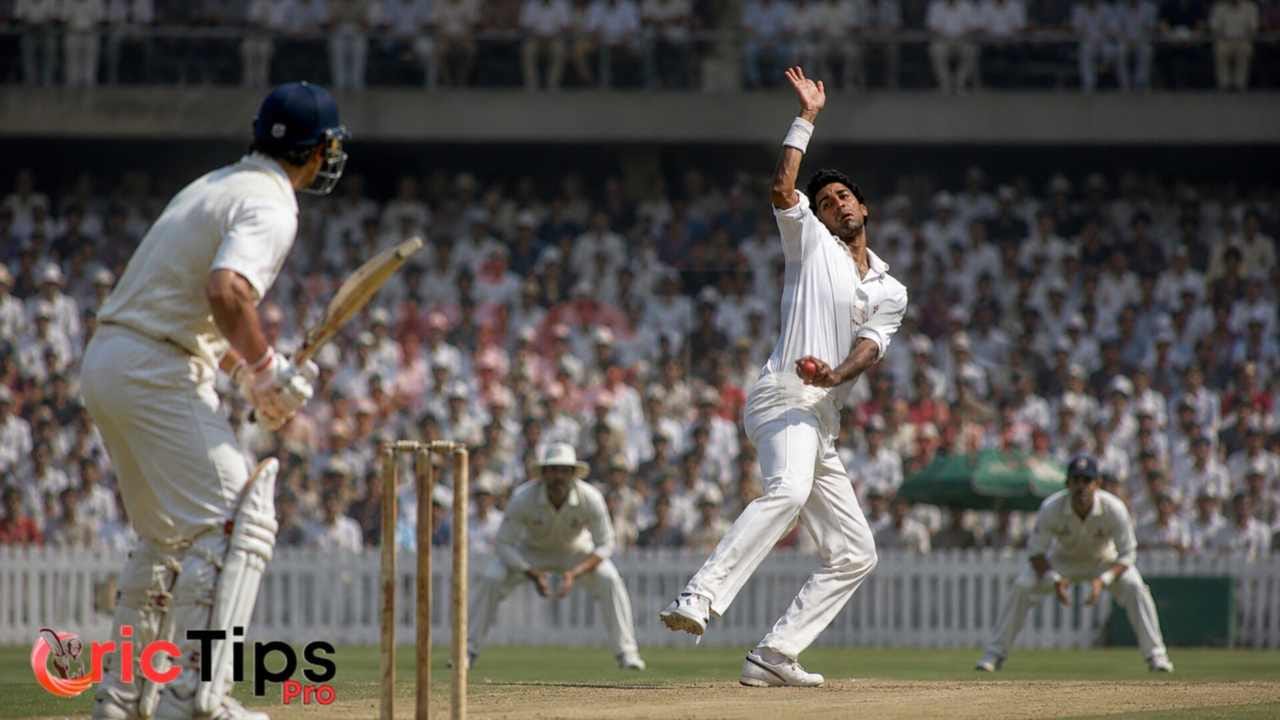
If one has to find the most unique aspect of Wasim Akram Biography, then the answer would be his extraordinary swing bowling. There have been many fast bowlers in the history of cricket, but very few have been able to make the ball dance in the air as he wished. Wasim Akram was not just a fast bowler; he was an artist in whose hands the cricket ball seemed to come alive. The biggest strength behind taking 414 Test and 502 ODI wickets in a two-decade international career was his perfect control, extraordinary technique and the ability to challenge the batter with every ball.
His bowling action was simple, rhythmic and very confusing. He could generate great speed without much run-up. His wrist and grip were almost hidden until the ball was released, so the batter could not understand which way the ball would move until the last moment. Along with this, his incredible arm speed made the ball faster and more dangerous. This natural action later set Wasim Akram apart from other pacers.
He would display a unique display of Conventional Swing when he got the new ball. As a left-arm pacer, his natural angle was always difficult for right-handed batsmen. Sometimes the ball would suddenly go in and create an LBW or bowl opportunity, and then the next ball would come out of the same action and touch the outside edge of the bat and give it to the Slip or Wicketkeeper. The biggest problem for the batsmen was – there was no way to tell until the last moment whether the ball would go in or out.
But when he got the old ball, Akram’s real magic began. He took Reverse Swing to a level that seemed almost unbelievable at the time. He would perfectly use the technique of keeping one side of the ball shiny and letting the other side decay naturally with teammate Waqar Younis. Then the deliveries made at high speed would suddenly change direction at the last moment. Many times the batter would understand the line of the ball and go for a shot, but the ball would suddenly go in and blow the stumps or hit the pads and trap him for LBW.
However, Akram’s weapon was not limited to swing. His Yorker was one of the best in the history of cricket. Especially with the old ball, the Reverse Swinging Yorker was so perfect that the ball would break the stumps or hit the batter’s toes before the bat was put down. And when the batter came forward and tried to control the swing, suddenly a fast bouncer would force them to retreat. Because of this variety, the batters could never feel comfortable against him.
That is why even the best batters in the world would have different plans before facing Wasim Akram. It was almost impossible to predict in advance which one would come – new ball, old ball, conventional swing, reverse swing, devastating yorker or sudden bouncer. This uncertainty was his greatest strength. And that is why Wasim Akram Biography is still not just the story of a legendary cricketer, but the history of a bowling artist who rewrote the definition of fast bowling.
Greatest Career Records and Achievements
Wasim Akram’s career is not limited to extraordinary performances, but is full of records that still hold special significance in cricket history. In an international career spanning almost two decades, he played 104 Tests and 356 ODIs for Pakistan. During this time, he established himself as one of the greatest fast bowlers of all time with 414 Test and 502 ODI wickets. Especially, becoming the first bowler in the world to touch the milestone of 500 wickets in ODI Cricket is one of the historic achievements of his career.
In Test Cricket, Akram has shown his ability not only with the ball but also with the bat. In 1996, he held the record for the highest individual innings as a No. 8 batsman by scoring an unbeaten 257 runs against Zimbabwe. The 12 sixes he hit in that innings are also considered a memorable feat for the same batting position. With the ball, he created a rare example by taking two separate Test hat-tricks against Sri Lanka in 1999.
Wasim Akram Biography is equally brilliant in limited overs cricket. His best bowling figures in ODI Cricket were 5/15, and he also has the distinction of taking two ODI hat-tricks. He proved that his extraordinary ability to handle pressure in big matches was one of his greatest strengths when he achieved these two feats in Sharjah against the West Indies in 1989 and Australia in 1990.
Akram’s contribution to the World Cup stage is even more memorable. He helped Pakistan become the world champion for the first time by performing brilliantly in both the bat and ball departments against England in the 1992 Cricket World Cup final. He has written his name as one of the most successful bowlers in the history of the tournament, taking 55 wickets in 38 matches in his entire World Cup career.
His extraordinary contribution has also been recognized in the international arena. After being elected Wisden Cricketer of the Year in 1993, he was inducted into the prestigious ICC Hall of Fame in 2009. He has also won the Player of the Match award 17 times in Test Cricket and 22 times in ODI Cricket for his consistent match-winning performances in international cricket.
All these achievements prove that Wasim Akram was not just a successful fast bowler; he is a legend whose record, influence and success still inspires the new generation of cricketers. And that is why Wasim Akram Biography is considered one of the most glorious biographies in the history of world cricket.
1992 World Cup Heroics
The most glorious chapter of Wasim Akram Biography is undoubtedly the 1992 ICC Cricket World Cup Final. In that one match, he transformed from a talented young pacer into an immortal legend of world cricket. When Pakistan’s exit was almost certain after losing one after another at the beginning of the tournament, captain Imran Khan uttered the famous “Cornered Tigers” message in front of his teammates. Wasim Akram was one of the main heroes who turned that belief into reality.
When Pakistan’s innings was struggling to make a big score in the final held at the Melbourne Cricket Ground (MCG), Akram played a great cameo of 33 runs off just 18 balls, coming in at number seven. That aggressive innings towards the end gave Pakistan a fighting capital. Then, with the ball, he gave a big blow to the opponent by dismissing experienced English all-rounder Ian Botham for a duck early in the match.
However, the real turning point of the match took place in the middle of England’s innings. When Allan Lamb and Neil Fairbrother were bringing England back into the match, Akram came on the attack again. First, he blew Allan Lamb’s off-stump with a brilliant late outswing. The next ball was a devastating inswinger from the same action, which broke the stumps of new batter Chris Lewis. Two different types of swing on two consecutive balls—this moment practically decided the fate of the match and is still remembered as one of the greatest bowling spells in ODI history.
Pakistan eventually won by 22 runs and became the World Cup champions for the first time. Akram won the Player of the Match award for his extraordinary contribution in both departments—bat and ball. That night was not just a story of winning a trophy; it was the story of a cricketer becoming a legend.
Even today, that 1992 final is remembered in cricket history as the turning point of Wasim Akram’s career. Because in that match, he proved that true legends establish their excellence not through records, but in the most difficult moments on the biggest stage.
Famous Partnerships and Rivalries
One of the most interesting aspects of Wasim Akram Biography is the historic bowling partnership he built and the rivalry with the world’s best pacers. His career was not only full of individual successes; it also witnessed some partnerships and rivalries that made the 1990s the golden age of fast bowling.
The brightest name in this chapter is Waqar Younis. Together they built one of the most formidable pace pairs in cricket history, which is still famous as “The Two Ws”. Left-handed Akram’s perfect swing and reverse swing, along with Waqar’s devastating reverse-swinging yorker, have repeatedly upset the best batting lineups in the world. The two together took Pakistan’s pace attack to new heights by taking 559 wickets in 61 Tests. Although they had a friendly rivalry off the field, they were each other’s biggest strength on the field.
Imran Khan was the first and most important guide in Akram’s career. From him, Akram learned the subtleties of fast bowling, the art of reverse swing and the art of maintaining mental toughness in big matches. The world saw the reflection of that education in the 1992 World Cup victory.
The emergence of Shoaib Akhtar towards the end of his career added a new dimension to Pakistan’s pace attack. Akram’s experience and technique combined with Shoaib’s raw speed made Pakistan a more formidable bowling unit. This generational connection further enriched Pakistan’s fast bowling tradition.
Among Akram’s biggest rivals in international cricket were South Africa’s Allan Donald and West Indies’ Curtly Ambrose. While Donald was known for his speed and perfect line-length, Akram would defeat batters with swing, variety and extraordinary technique. On the other hand, while Ambrose dominated with his extra height and bounce, Akram would take control of the match in a completely different way by dancing the ball in the air.
However, one of the most popular debates in the discussion of fast bowling has always been around Wasim Akram and Glenn McGrath. One was a magician of variety and swing, the other a symbol of perfect line-length and consistency. Both were the best of their respective eras, but their bowling philosophies were completely different.
Wasim Akram vs Glenn McGrath – Career Comparison
| Statistics | Wasim Akram | Glenn McGrath |
| Test Matches | 104 | 124 |
| Test Wickets | 414 | 563 |
| Test Bowling Average | 23.62 | 21.64 |
| Test 5-Wicket Hauls | 25 | 29 |
| ODI Matches | 356 | 250 |
| ODI Wickets | 502 | 381 |
| ODI Bowling Average | 23.53 | 22.02 |
Both are legends in terms of numbers. However, what makes Wasim Akram Career special is his extraordinary variety, unparalleled skill in reverse swing and ability to make important contributions for the team with the bat. And that is why, even today, numerous cricket analysts and former players around the world rate him as the best left-arm fast bowler of all time.
Memorable Matches and Career Highlights
The biggest feature of Wasim Akram Biography is that his career is not only rich in records, but also in numerous match-winning performances. Be it new ball or old ball, home ground or foreign conditions, whenever the team needed it the most, he gave his best. That is why his name is still mentioned with equal importance in many memorable matches in the history of cricket.
One of Akram’s unique achievements in international cricket is four International Hat-tricks. He is the only bowler who has achieved the feat of taking two ODI and two Test Hat-tricks. His first ODI Hat-trick against West Indies in Sharjah in 1989 shocked the cricket world. The next year, he played an important role in Pakistan winning the title by taking another Hat-trick in the final against Australia at the same venue. In 1999, he created one of the rarest feats in history by taking two Hat-tricks in two consecutive Tests against Sri Lanka.
One of his best performances abroad came in the Antigua Test in 2000. He single-handedly changed the course of the match by taking 11 wickets in two innings against a strong West Indies batting line-up. Such controlled swing and consistent aggressive bowling in Caribbean conditions is still considered an ideal example of fast bowling by cricket analysts.
Akram has always bowled at a different level in big matches against India. His new ball spell in the 1999 Sharjah Cup Final was extraordinary. He put the Indian batting line-up under pressure from the start with consistent swing and perfect line-lengths and played a key role in Pakistan’s easy victory with bowling figures of 3/11. He was adjudged Player of the Match for that performance.
Although he is primarily known as a fast bowler, he has also rescued the team with the bat on more than one occasion. His unbeaten 257 against Zimbabwe in 1996 is the best example of his all-round ability. No. This world record, set as a batsman for 8, is still considered one of the most memorable innings in Test Cricket and proves that Akram could change the course of a match not only with the ball but also with the bat.
Along with all these performances, his match-winning contribution in the 1992 ICC Cricket World Cup Final propelled him to the highest echelons of world cricket, as discussed in detail in the previous chapter. And for all these reasons, Wasim Akram Career is not just a story of statistics; it is the journey of a cricketer who continues to inspire generations with his extraordinary skill, courage and consistent match-winning performances.
Batting, Fielding and Leadership
Wasim Akram Biography is not just the story of a legendary fast bowler; it is the journey of a complete cricketer who left his mark in every department of batting, fielding and leadership. His swing with the ball was a nightmare for the best batsmen in the world, but he was equally effective in other roles when the match required it. That is why Akram is considered not just a bowler, but one of the best all-round cricket figures in Pakistan cricket.
Akram was fearless and aggressive with the bat. Even in the lower-order, he had an uncanny ability to score runs quickly and change the pace of the match. His powerful left-handed shot, ability to hit big sixes and positive mentality in moments of pressure set him apart from ordinary tailenders. He never batted just to save wickets; rather, he would counter-attack the opposition whenever he got the chance.
Akram was equally reliable in fielding. Unlike many fast bowlers, he did not just stay on the boundaries; Rather, he regularly fielded at important places like Slip, Gully, Mid-on or Mid-off. His safe catching, quick reflexes and perfect throws have brought Pakistan important breakthroughs many times. His enthusiasm on the field also gave other players additional confidence.
Akram was also brave and visionary in leadership. He always believed in attacking cricket and wanted to keep the control of the match in his own hands. His ability to change bowlers according to the situation, bold field placement and quickly understand the opponent’s weaknesses and change tactics made him a successful captain. Under his leadership, Pakistan achieved several memorable successes against the strongest teams in the world.
However, Akram’s greatest legacy probably extends beyond the field. He has long advised young pacers, boosted their confidence and played a significant role in teaching the finer points of fast bowling. Even after his playing career ended, he continues to inspire a new generation of bowlers as a Coach, Mentor and cricket analyst. That is why Wasim Akram’s career is not just a story of his own achievements, but also a lasting inspiration for future generations of fast bowlers.
Career Statistics Summary
Wasim Akram Career statistics prove why he is considered the greatest left-arm fast bowler in the history of cricket. He has consistently made significant contributions with both bat and ball in an international career spanning almost two decades. The table below summarizes his key statistics from international and domestic cricket.
| Format | Matches | Batting Average | Bowling Average | Five-Wicket Hauls | Best Bowling Figures |
| Test | 104 | 22.64 | 23.62 | 25 | 7/119 |
| ODI | 356 | 16.52 | 23.53 | 6 | 5/15 |
| T20I | 0 | – | – | – | – |
| First-Class | 257 | 22.73 | 21.64 | 70 | 8/30 |
| List A | 594 | 18.90 | 21.91 | 12 | 5/10 |
These statistics clearly show that Wasim Akram Biography is not just a story of numerous records; This is the story of a cricketer who set new standards in fast bowling with remarkable consistency, both at the international and domestic levels.
Personal Life
On the field, Wasim Akram was aggressive, confident and a fearsome name for his opponents. But off the field, he is a completely different person, a family-loving, calm and socially responsible personality. Even after retiring from cricket, he has maintained his position as one of the most respected cricket personalities in the world by maintaining a balance between his personal life and professional responsibilities.
In his personal life, Akram has married twice. In 1995, he married Huma Mufti. After a long journey together, Huma’s untimely death in 2009 brought deep sorrow to his life. A few years later, in 2013, he married Australian citizen Shaniera Akram. After marriage, Shaniera adapted herself to the culture of Pakistan and became an important ally of Akram in various social initiatives.
Family has always been the biggest strength in Akram’s life. He has two sons, Tahmoor and Akbar, with his first wife, and a daughter, Aiyla Sabeen Rose Akram, with his second wife. Despite his busy professional life, he always gives special importance to spending time with his family.
After retiring from cricket, Akram has become one of the most well-known faces in the world of international cricket broadcasting. His analysis as a commentator, TV analyst and cricket expert in major tournaments around the world is equally popular. In addition, he is passing on his experience to the new generation of cricketers by working as a coach and mentor with various T20 franchises.
His commitment to society is also evident off the field. He is regularly involved in various charitable initiatives, healthcare and support activities for underprivileged children. He also actively participates in various environmental conservation, public awareness and social development programs with his wife Shaniera Akram.
In his spare time, Akram loves to enjoy a simple and quiet life. His interest in cinema has been there since childhood, and he exercises regularly to maintain his physical fitness. Whenever he gets the chance, he plays golf and enjoys some quiet moments outside of his busy life by spending time with his family. These aspects prove that Wasim Akram Biography is not just the story of a legendary fast bowler; it is also the life story of a successful family-loving, socially conscious and inspiring person.
Interesting Facts About Wasim Akram
Wasim Akram Biography is not just a story of records, trophies or wickets. There are many unknown and surprising events in his life that make him different from all other legendary cricketers. Along with his great performance on the field, some moments of his personal life and career are still of interest to cricket lovers.
The most surprising thing is that Akram never grew up with long training in a formal cricket academy. The foundation of his bowling was formed from Tape Ball Cricket in Lahore. While practicing with an old ball, he mastered the basic concept of Reverse Swing at a very young age, which later became his biggest weapon.
Not many people know that he played most of his international career while controlling Type 1 Diabetes. By following regular health checks, insulin and a strict fitness routine, he bowled at an equal pace against the best batters in the world. His struggle is still an example of inspiration for countless athletes.
Akram’s main interest in childhood was batting. But with time, he realized that his real strength lies in Left-arm Fast Bowling. That decision changed his life and gave world cricket one of the greatest swing bowlers in history.
Akram’s personality was also quite vibrant outside of cricket. Once, he received an offer to act in Bollywood, but he politely turned it down, because his full focus was on his cricket career. His sense of humor was also great on the field. In a friendly match, he jokingly appealed for caught behind against the umpire, which made everyone present laugh.
These small incidents prove that Wasim Akram’s career is not just a chapter full of records; it is an inspiring journey of struggle, confidence, humor and extraordinary dedication. And that is why Wasim Akram is equally respected as one of the most revered legends not only in Pakistan but also in world cricket.
Conclusion
Wasim Akram Biography is not just the story of the career of a legendary Fast Bowler; it is an extraordinary example of talent, hard work, confidence and a never-give-up mentality. Starting from the simple Tape Ball Cricket of Lahore to establishing himself as the “Sultan of Swing” on the highest stage of world cricket—his entire journey proves that true legends make their own history.
414 Test wickets in international cricket, 502 ODI wickets, countless match-winning performances and an unforgettable contribution to the history of Pakistan cricket—these achievements are not just a story of numbers. Behind every success was hard work, a courageous mindset and an indomitable will to always improve oneself. That is why Wasim Akram’s career is still considered a unique benchmark in Fast Bowling.
Even today, countless young Fast Bowlers around the world try to learn from his bowling action, swing technique and match-winning mentality. He has shown that true success does not come with talent alone; Discipline, perseverance and a desire to learn are what make a player immortal in the pages of history.
Many great bowlers have come and gone in the history of cricket. But some names transcend the boundaries of time and become symbols of inspiration. Wasim Akram is one of those rare legends—whose magic of swing, fighting spirit and immense love for cricket will inspire every generation to come.
Who is Wasim Akram?
Wasim Akram is a former Pakistani cricketer widely regarded as one of the greatest left-arm fast bowlers in cricket history. According to the Wasim Akram Biography, he earned the nickname “Sultan of Swing” for his exceptional ability to swing the ball both conventionally and in reverse.
Why is Wasim Akram called the Sultan of Swing?
Wasim Akram is called the “Sultan of Swing” because of his unmatched mastery of conventional swing, reverse swing, and deadly yorkers. His bowling revolutionized fast bowling and inspired generations of cricketers.
How many international wickets did Wasim Akram take?
Wasim Akram finished his international career with 916 wickets, including 414 wickets in Test cricket and 502 wickets in One Day Internationals (ODIs), making him one of the highest wicket-takers in cricket history.
What was Wasim Akram’s greatest achievement?
One of the greatest moments in the Wasim Akram Biography was his match-winning performance in the 1992 ICC Cricket World Cup Final, where he helped Pakistan lift their first-ever World Cup trophy and won the Player of the Match award.
Did Wasim Akram score a Test double century?
Yes. Wasim Akram scored an unbeaten 257 runs against Zimbabwe in 1996, which remains one of the highest Test scores by a No. 8 batter and highlights his valuable all-round abilities.
What is Wasim Akram doing now?
After retiring from international cricket, Wasim Akram has worked as a cricket commentator, analyst, coach, and mentor. He continues to share his knowledge of fast bowling while inspiring young cricketers around the world.