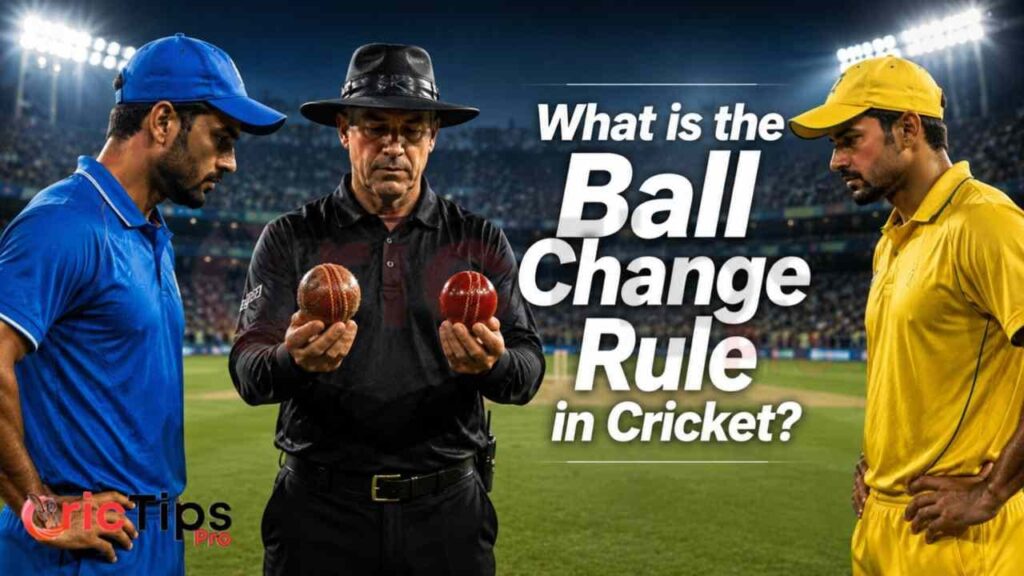
When the umpire suddenly changes the ball in the middle of a cricket match, many viewers wonder why this happened. Is the ball just old, or is there a specific ICC rule behind it? Changing the ball at a crucial moment in the match can often change the course of the game.
The answer to this question lies in the What is the Ball Change Rule in Cricket rule. If the ball is deformed, damaged, lost, or the allotted over is completed, the ball can be changed according to the ICC rules. However, this decision is not made by a player, but by the two umpires who are completely on the field, so that the balance and fairness of the game is maintained for both teams.
In this article, we will learn in detail about the What is the Ball Change Rule in Cricket in simple language. When the ball is changed, in what situations is the substitute ball used, who makes this decision, and why this rule is so important in modern cricket, everything will be discussed step by step.
What is the Ball Change Rule in Cricket?
In cricket, the What is the Ball Change Rule in Cricket refers to a rule that determines when and under what circumstances a ball can be changed during a match. The main objective of this rule is to maintain fairness in the game, ensure the safety of the players and maintain a balance between the batter and the bowler.
A cricket ball never remains the same throughout the innings. Over time, the shine of the ball decreases, its shape changes and its behavior also changes. New balls help pace bowlers swing, while slightly older balls become more effective for spinners and reverse swing bowlers. So if the condition of the ball is not normal, then the outcome of the match can also be affected.
This is why the ICC has changed the ball change rule from time to time. Although two new balls were used from each end in ODI cricket in 2011, it was later seen that this gave the batters a comparative advantage and reduced the opportunity for reverse swing. The rules were amended in 2025 to restore that balance. Now, although two balls are used for the first 34 overs, after that the bowling team chooses one ball and finishes the rest of the innings. As a result, the ball naturally ages and the bowlers can also use their skills better in the match.
Not only that, the ICC has also added new guidelines to reduce the problem of stopping play in Test matches due to bad light and to prevent abuse of the ball-changing rule. This maintains the continuity of the match and ensures an equal competitive environment for both teams.
According to the rules of the ICC and MCC, the ball can be changed in certain situations. After the completion of 80 overs in Test cricket, the fielding team gets the opportunity to take a new ball. In ODIs, after the first 34 overs, one of the two balls is selected and the rest of the innings is played with that ball. In addition, the umpire can decide to change the ball if the ball is lost, the skin is torn, the seam is damaged, the shape of the ball is lost or it becomes unusable due to excessive moisture.
However, it is important to remember one thing. Changing the ball in the middle of the match does not mean giving a new ball. If the ball is lost or damaged, the umpire selects a used ball that is as similar in wear, age and condition as possible to the original ball. This does not give either team an undue advantage or disadvantage and the fairness of the match is ultimately maintained.
Why Does the Ball Need to Be Changed?
In a cricket match, the condition of a ball can sometimes change the course of the entire game. So changing the ball when it is no longer playable is not just a rule, but an important part of maintaining the fairness, safety and competitive balance of the game. Knowing what is the Ball Change Rule in Cricket makes it easy to understand when the ball is changed and why this rule is so important in cricket.
The most common reason is the ball being lost. If the ball goes out of the stadium after a big shot or falls in a place where it cannot be quickly retrieved, the umpire uses a substitute ball to continue the game. This keeps the pace of the match normal and avoids unnecessary delays.
Even if the ball is severely damaged, it needs to be changed. If the skin is torn, the seam is opened or there are large cracks, the normal speed, bounce and swing of the ball are lost. Using such a ball not only affects the quality of the game, but also increases the safety risk for the players.
Sometimes the ball loses its round shape due to prolonged use or due to hard impacts. The ball can then bounce abnormally, creating an uncertain situation for both the batter and the bowler. Similarly, if the ball becomes excessively slippery and cannot be controlled properly due to heavy rain or a wet outfield, it is also considered unfit for play.
However, changing the ball does not mean giving a new ball. If the ball is lost or damaged midway through the match, the umpire selects a used ball that is as similar in age, wear, weight and overall condition as possible to the previous ball. This ensures that no team gains an advantage and the competitive balance of the game is maintained.
That is why the What is the Ball Change Rule in Cricket is not just a general rule; it is a system that ensures that the outcome of the match is determined by the skill, technique and performance of the players and not by the condition of the ball. This rule is therefore of utmost importance in maintaining the fairness and standards of cricket.
Who Decides to Change the Ball?
The decision to change the ball in a cricket match is entirely the responsibility of the two on-field umpires on the field. When learning about What is the Ball Change Rule in Cricket, it is important to understand that no team or player can change the ball at will. The final decision on whether the ball is fit for play or not is always made by the umpires.
If the ball is deformed, the skin or seams are damaged, or for any other reason the ball cannot be used normally, then the two umpires examine the ball together. If necessary, the shape of the ball is checked with the help of a special ring gauge. If it is confirmed that the ball needs to be changed, they select a used ball that is as similar in wear, weight and condition as possible to the previous ball.
Players can also request a ball change. Usually, the bowler or the captain of the fielding team draws the attention of the umpire to a problem with the ball. However, requesting and making a decision are not the same thing. Players do not have the right to order a ball change under any circumstances. The final decision always lies with the umpires.
However, there is a specific exception in Test cricket. After 80 overs are completed with a ball, the captain of the fielding team has the right to take a new ball. However, the official permission to play a new ball is given by the umpires on the field.
The fourth umpire also plays an important role in the entire process of changing the ball. He prepares a suitable replacement ball from the collection of used balls and delivers it to the field. On the other hand, the match referee does not participate in the decision to change the ball normally. However, if the allegation of ball tampering is proven, then he takes disciplinary action based on the report of the on-field umpires.
Due to this integrated process, the decision to change the ball in cricket is always impartial. This maintains the fairness of the game, reduces the chances of gaining an unfair advantage and the competitive balance of the match is intact.
When Can the Umpire Replace the Ball?
In cricket, the power to change the ball is entirely in the hands of the two on-field umpires on the field. However, they do not change the ball at will. A replacement ball is used only after it is confirmed that the ball has truly become unplayable. According to What is the Ball Change Rule in Cricket, the main objective of every decision is to maintain the fairness, safety and continuity of the match.
The most common situation is when the ball is lost. If a batter plays a big shot and the ball goes out of the stadium or cannot be retrieved even after a long search, the umpire declares it ‘dead ball’ and restarts play with a used ball of equivalent quality. This prevents the match from being stopped for an unnecessarily long time.
If the ball becomes so wet due to excessive rain, heavy dew or a wet outfield that the bowler cannot safely catch or control it, the umpire may decide to change the ball. However, only a slight dampness or light dampness is usually not a reason for changing the ball.
If the inner part of the ball bursts or the outer skin is completely torn, it can no longer be used safely. In such a situation, the umpire quickly changes the ball, because a damaged ball can disrupt the normal speed of play and also be dangerous for the players.
Similarly, if the seam of the ball is severely damaged, the stitching is opened or the structure of the ball is weakened, then it is also considered unfit for play. If necessary, the umpire examines the ball and confirms and then brings a suitable replacement ball to the field.
In addition, if the shape of the ball is abnormally deformed, if it is severely damaged by hitting a concrete or metal object outside the boundary, or if there is evidence of ball tampering, the umpire immediately orders the ball to be changed. In such cases, disciplinary action may also be taken against the team concerned, if necessary.
However, it is important to remember one thing. The ball is not changed only in the hope of getting more swing, due to the loss of the natural shine of the ball or if the batting team complains about reverse swing. A substitute ball is used only if the umpire is satisfied that the ball is truly unplayable.
References: The information in this section is based on the MCC Laws of Cricket (Law 4 – The Ball) and the ICC Playing Conditions regarding ball substitution.
How Is the Replacement Ball Selected?
In cricket, the decision to change the ball is as important as choosing the right replacement ball. One of the most important parts of the What is the Ball Change Rule in Cricket is that when a ball is lost or becomes unplayable, it is replaced not with a brand new ball, but with a used ball that is as similar as possible to the previous ball.
That is why, before the start of the match, the organizing authority collects used balls from first-class matches played at the same venue. These balls are stored in a specific collection, which is sometimes informally called the “Ball Library”. If necessary, a suitable replacement ball is selected from here.
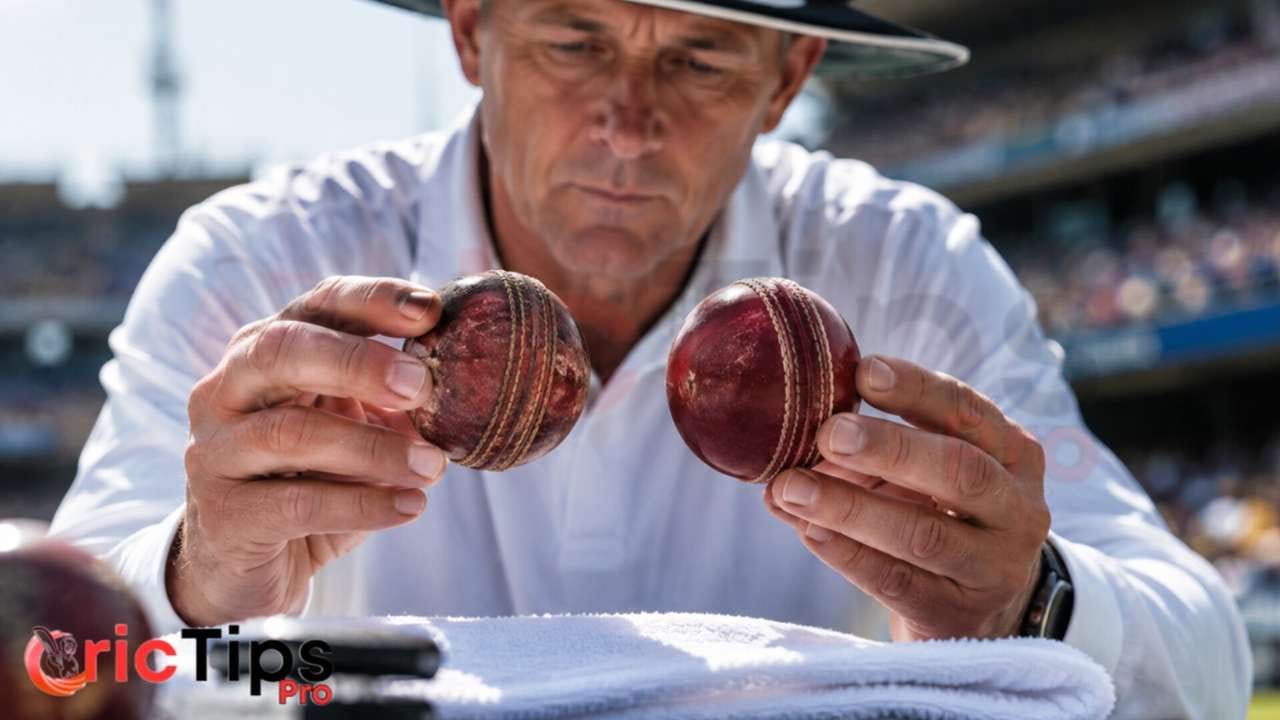
Before choosing a replacement ball, each ball is carefully examined. The fourth umpire checks the shape and size of the ball with the help of a special metal ring gauge. Then the on-field umpire selects a ball that is as similar as possible to the previous ball, considering the degree of wear, the condition of the seams, the shine and the number of overs used.
Many people wonder why a new ball is not given immediately when the ball is damaged? The reason is that the behavior of a new ball is completely different from that of an old ball. Since the new ball is harder, it bounces more, comes to the bat at a faster speed and has a higher probability of swing. On the other hand, a slightly older ball is more effective for spin and reverse swing. Therefore, suddenly giving a new ball can destroy the natural balance of the match.
Suppose, a batting team has naturally aged the ball by handling 40 or 50 overs of hard bowling. If the bowling team gets a new ball at that time, then they will get an unfair advantage. Conversely, if a bowling team has taken care of one side of the ball for a long time to make it suitable for reverse swing, then giving them a new ball will also be worthless.
This is why the ICC and MCC emphasize the use of a ball of similar wear and condition when changing the ball. As a result, the natural pace of the match is maintained, neither team’s strategy is suddenly broken and the competitive balance between bat and ball remains intact until the end.
ICC Rules for Ball Replacement
Every decision to change the ball in cricket is made under specific rules. To understand what is the Ball Change Rule in Cricket, it is important to have an idea about the ICC Playing Conditions. These rules clearly state under what circumstances a ball can be legally changed, who will make that decision and what the players can or cannot do.
According to ICC rules, the umpire can allow a ball to be changed if the ball is lost, becomes unfit for play due to normal use or if the condition of the ball has been illegally changed. However, before making a decision in each case, the actual condition of the ball is checked so that no team gets an unfair advantage.
The final authority in this entire process lies with the two on-field umpires on the field. They are the only ones who decide whether the ball is really fit for play or not. If necessary, they can check the ball at various times during the match and if the ball needs to be changed, they select a used ball of the same quality as the previous ball. However, if the ball is proven to have been tampered with, the relevant ICC regulations may differ in the method of selecting a replacement ball in special circumstances.
The ICC has also given some clear instructions to the players. Before the start of the match, the captain of the fielding team or his designated representative can select the ball to be used in the match from the balls stored under the supervision of the ICC. During the match, players can polish the ball using natural sweat, but no artificial substances are allowed.
On the other hand, deliberately changing the shape of the ball, damaging the seam, using prohibited materials on the ball or attempting to illegally deform the ball is a direct violation of the ICC rules. If such allegations are proven, the umpire can immediately change the ball, award a 5-run penalty to the offending team and report the matter to the match referee, so that necessary disciplinary action can be taken.
In addition, the use of saliva is still prohibited. However, the ball is no longer automatically changed only if saliva is accidentally applied. Only if the umpire feels that the condition of the ball has visibly and seriously changed as a result, then the decision to change the ball is taken.
The main purpose of these rules is one and the same – to maintain fair competition between bat and ball at every moment of the game. Therefore, the ICC attaches the utmost importance to not only the application of the rules when it comes to ball tampering, but also the natural balance of the match and the integrity of the game.
Ball Change Rule in Test, ODI and T20 Cricket
While the basic rules for changing the ball are the same in the three international formats of cricket—Test, One-Day International (ODI) and Twenty20 (T20)—there are some important differences in how they are applied in practice. It is important to understand these differences in understanding what is the Ball Change Rule in Cricket, as the number of overs, ball usage and match tactics in each format are different.
One thing is common across all formats. Only the on-field umpire can decide to change the ball if it is lost, severely damaged, deformed or unfit for play. A team cannot demand a new ball simply because the ball has lost its shine or is losing swing. If a ball needs to be changed mid-match, a used ball of equivalent wear and tear and condition to the previous ball is brought onto the field.
However, the real differences are in the way each format is played. In Test cricket, a ball is used for a longer period of time. So the ball gradually ages, the seam wears out and techniques like reverse swing become an important part of the match. After 80 overs, the fielding team also gets a chance to take a new ball, which is a special feature of Test cricket.
The situation is different in T20 cricket. Since an innings is only 20 overs, the same ball is used throughout the innings. As a result, there is no natural opportunity to take a new ball. The ball is changed only when it is lost or becomes unplayable.
The rules for using the ball in ODI cricket are the most different. At the beginning of the innings, two new white balls are used from both ends. However, according to the revised rules of the ICC, although these two balls are used for the first 34 overs, then the captain of the fielding team selects a ball and the rest of the innings is played with that one ball. As a result, the ball gets a chance to age naturally, which helps in restoring reverse swing and extra grip for the spinners in the last overs.
Despite these differences, the main objective remains the same. The ICC and MCC have designed the ball change rules in such a way that a fair competition is maintained between bat and ball in each format and the outcome of the match is determined by the skill and technique of the players, not by the abnormal conditions of the ball.
Famous Matches Where the Ball Was Changed
There are several international matches in cricket history where the decision to change a ball has had a major impact on the pace, strategy and outcome of the match. These incidents have not only sparked controversy but also clearly demonstrated why the ball change rule is so important. Real-life examples are therefore of great importance to understand What is the Ball Change Rule in Cricket.
One of the most talked about incidents occurred in the 2006 England vs Pakistan Test match at The Oval in London. During the match, umpires Darrell Hair and Billy Doctrove raised objections to the condition of the ball and awarded Pakistan a five-run penalty for alleged ball tampering. The ball was then changed. The match was eventually declared a forfeit after Pakistan failed to return to the field on time after the tea break. This is still known as the only forfeited match in the history of Test cricket.
Another much talked about incident occurred in The Oval Test of the 2023 Ashes series. When Australia were chasing, a substitute ball was used instead of the deformed ball. The Australian players claimed that the new ball was harder and shinier than expected. The English bowlers then gained extra movement, the momentum of the match changed and England eventually won a dramatic victory. This incident has sparked a new debate around the world about the process of selecting a replacement ball.
These two matches have shown that the rules for changing the ball are not just a formality. If the correct quality replacement ball is not selected, the balance of the match can be changed. Therefore, according to the ICC Playing Conditions and MCC Laws of Cricket, the umpires try to select a ball that is as similar as possible to the previous ball, taking into account the deterioration, shape, seam condition and degree of use of the ball.
If the ball is naturally damaged, lost or becomes unplayable, it is replaced with a used ball of equivalent quality. However, if there is evidence of deliberate ball tampering, the umpire immediately changes the ball, awards a five-run penalty to the batting team and refers the matter to the match referee, so that further disciplinary action can be taken in accordance with ICC rules.
These examples from real matches prove that a right or wrong ball change decision can sometimes change the course of an entire match. Therefore, this rule is applied with great importance in international cricket, so that fair competition and integrity of the game are maintained in every match.
References: MCC Laws of Cricket (Law 4 – The Ball, Law 41 – Unfair Play), ICC Playing Conditions, Official Match Records of 2006 England vs Pakistan Oval Test (Forfeited Test) and 2023 England vs Australia Ashes Oval Test.
Conclusion
The ball change rule in cricket is not just a formal process, but also an important part of maintaining the fairness, safety and competitive balance of the game. If the ball is lost, damaged or becomes unfit for play, an equivalent ball is used according to certain rules, so that no team faces an unreasonable advantage or disadvantage.
It has been seen many times in international cricket that a right or wrong ball change decision can change the course of the match. Therefore, the ICC and MCC apply this rule with great importance, so that each match is decided based on the skill, strategy and performance of the players.
If you have a clear idea about What is the Ball Change Rule in Cricket, then you will be able to understand the umpire’s decisions, bowlers’ strategies and important moments of the game more easily during the match. For a cricket lover, knowing this rule is not only information, but also enriches the experience of enjoying the match.
What is the Ball Change Rule in Cricket?
The Ball Change Rule in Cricket explains when and why the match ball can be replaced. A ball is changed only if it is lost, damaged, out of shape, or unfit for play, and the decision is made by the on-field umpires according to ICC Playing Conditions and MCC Laws.
Who decides to change the ball in a cricket match?
Only the two on-field umpires have the authority to decide whether a ball should be replaced. Players may request a ball inspection, but the final decision always belongs to the umpires.
Why is a new ball not always used as a replacement?
A brand-new ball could give one team an unfair advantage because it behaves differently from an older ball. Therefore, umpires usually replace it with a used ball of similar age and condition.
Can a team ask for a ball change whenever they want?
No. A team cannot demand a ball change simply because the ball has become old or stopped swinging. The ball is replaced only if it meets the conditions set out in the Laws of Cricket and ICC Playing Conditions.
Does the Ball Change Rule differ in Test, ODI, and T20 cricket?
The basic rule is the same across all three formats. However, the way the rule is applied differs because of the match format, ball usage, and playing conditions, especially the two-ball system used in One Day Internationals (ODIs).