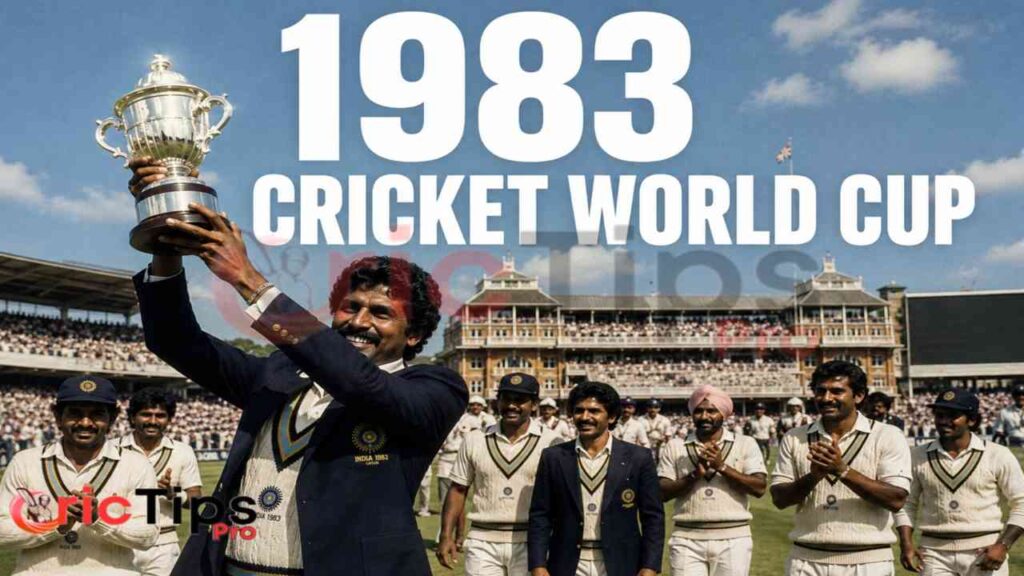
The 1983 cricket World Cup was one of the most important tournaments in cricket history. It was the third edition of the Cricket World Cup and was held in England and Wales from June 9 to June 25, 1983. Before the tournament started, most cricket fans and experts believed that the West Indies would win the title again because they were the strongest team in the world and had already won the first two World Cups. India, on the other hand, was not considered a favorite. However, under the leadership of Kapil Dev, the Indian team surprised everyone with their outstanding performances throughout the tournament.
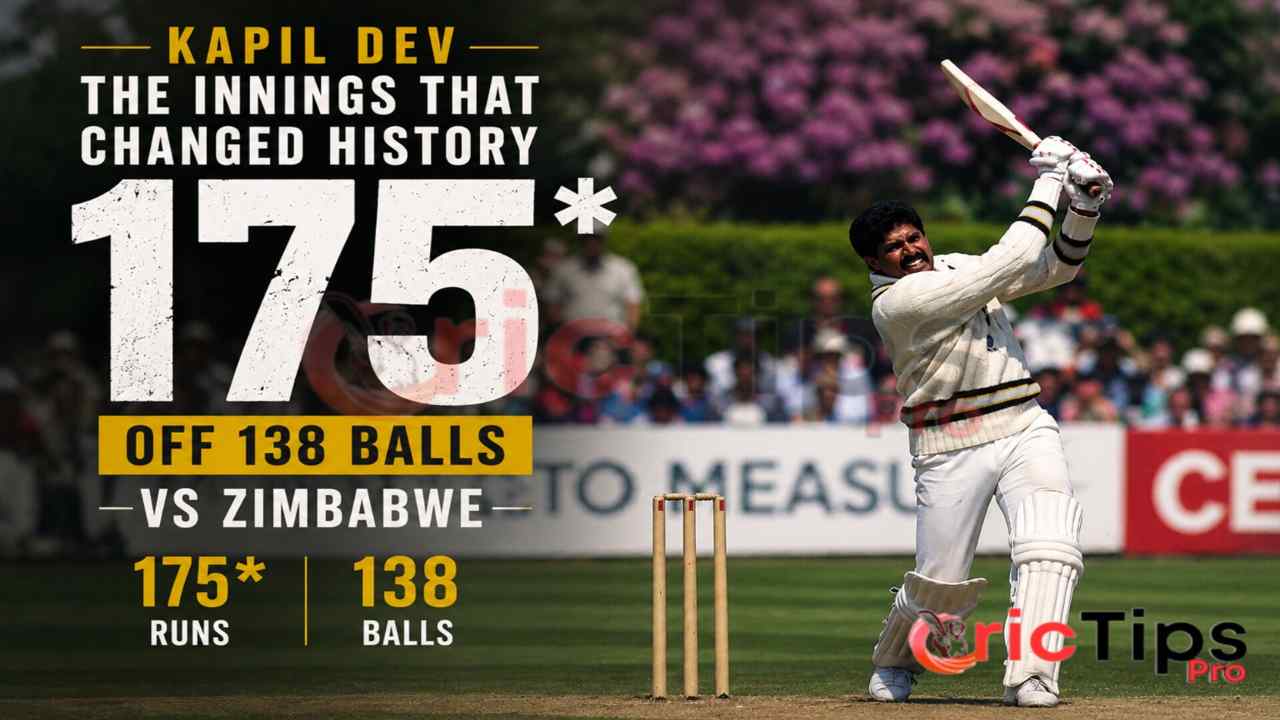
A total of eight teams participated in the competition. India played with great determination and confidence, defeating stronger opponents on their way to the final. One of the most memorable moments of the tournament was Kapil Dev’s unbeaten 175 runs against Zimbabwe, which helped keep India’s World Cup dream alive.
The final match was played at Lord’s Cricket Ground in London on June 25, 1983. India scored only 183 runs, and many people expected the West Indies to win easily. However, the Indian bowlers produced a remarkable performance and kept fighting until the end. A turning point came when Kapil Dev took a famous running catch to dismiss Viv Richards. The West Indies batting lineup then collapsed under pressure and was bowled out for 140 runs.
India won the match by 43 runs and lifted their first-ever World Cup trophy. The victory became one of the greatest upsets in sports history and changed the future of cricket in India forever. The 1983 cricket World Cup inspired millions of young players, increased the popularity of cricket across the country, and laid the foundation for India’s rise as a global cricket powerhouse. Even today, it remains one of the most celebrated moments in Indian cricket history.
Why India Entered the World Cup as Underdogs
Today, India is one of the strongest teams in world cricket. But before the 1983 Cricket World Cup, things were very different. Very few people believed India could win the tournament. Cricket experts, fans, and even bookmakers saw India as outsiders with almost no chance of lifting the trophy. In fact, British bookmakers gave India odds of 66-to-1, showing just how unlikely their success seemed at the time.
One major reason was India’s poor record in previous World Cups. In the 1975 and 1979 editions, India won only one match out of six, and that victory came against East Africa, a non-Test-playing team. They failed to reach the knockout stage in both tournaments, which made it difficult for anyone to see them as serious contenders.
India also struggled in One-Day International cricket. During that period, the team focused mainly on Test cricket, while ODI cricket was still a relatively new format. Their performances in limited-overs matches were inconsistent, and they lacked the experience that stronger teams had already developed.
Another big factor was the strength of the West Indies. They were the defending champions and the most feared team in world cricket. With legendary players such as Clive Lloyd, Viv Richards, Joel Garner, Michael Holding, and Andy Roberts, they looked almost unbeatable. Compared to them, India’s squad appeared less experienced and far less intimidating.
India also did not have the global reputation or financial power it enjoys today. The cricket board was not as influential, and international expectations were very low. Some players even saw the trip to England as a valuable experience rather than a realistic chance to win the title.
However, that lack of expectation became India’s biggest advantage. With nothing to lose and everything to prove, they played fearless cricket throughout the tournament. By the end of the 1983 Cricket World Cup, the team had achieved one of the greatest upsets in sports history and changed the future of Indian cricket forever.
Kapil Dev’s Leadership and India’s World Cup Squad
Sometimes, all it takes is one great leader to change the future of a team. For India, that leader was Kapil Dev. At just 24 years old, he captained an Indian side that very few people expected to win the World Cup. But his confidence, courage, and positive attitude changed the mindset of the entire team. During the 1983 Cricket World Cup, India did not just win matches they learned to believe in themselves.
One of the best examples of Kapil Dev’s leadership came in the famous match against Zimbabwe. India was struggling badly at 17 for 5 when he walked out to bat. What followed was one of the greatest innings in cricket history. His unbeaten 175 runs rescued India from a difficult situation and gave the team a huge boost in confidence. After that innings, the players started believing that no challenge was too big and that they could fight back from any position.
Another important part of Kapil Dev’s leadership was the unity he created within the team. He treated both senior and junior players with equal respect and trust. On the field, he allowed players to express themselves and make decisions freely. Off the field, he kept the dressing room together and built a strong team spirit. This positive environment helped India play with confidence throughout the tournament.
Of course, Kapil Dev was not alone. He was supported by a group of talented and hardworking players. Mohinder Amarnath played a key role and was named Player of the Match in both the semi-final and the final. Sunil Gavaskar, Kris Srikkanth, Yashpal Sharma, and Sandeep Patil made valuable contributions with the bat. Roger Binny finished as the tournament’s highest wicket-taker, while Madan Lal and Balwinder Sandhu delivered important breakthroughs when the team needed them most. Behind the stumps, Syed Kirmani provided reliability and calmness under pressure.
In the end, this team achieved much more than winning a trophy. They changed the future of Indian cricket forever. At the heart of that historic journey was Kapil Dev—a captain whose leadership turned the 1983 Cricket World Cup into one of the greatest moments in Indian sporting history.
India’s Group Stage Journey and Key Victories
India’s journey in the 1983 Cricket World Cup began with plenty of challenges and very little expectation. They were placed in Group B alongside the two-time defending champions West Indies, a strong Australian team, and a determined Zimbabwe side. Most cricket experts did not expect India to qualify from such a difficult group. However, the team showed great fighting spirit throughout the tournament, winning four of their six group-stage matches and finishing second in the group to secure a place in the semi-finals.
One of India’s biggest achievements in the group stage came in their opening match against the West Indies. Before this game, the West Indies had never lost a match in World Cup history. India posted a competitive total, thanks largely to Yashpal Sharma’s brilliant 89-run innings. The Indian bowlers then produced a disciplined performance to secure a memorable victory. This win gave the team a huge confidence boost and proved that they could compete with the best teams in the world.
The most unforgettable moment of the group stage came against Zimbabwe. India found themselves in serious trouble at 17 for 5, with their World Cup hopes hanging by a thread. At that crucial moment, captain Kapil Dev played one of the greatest innings in cricket history, scoring an unbeaten 175 runs. His incredible knock not only rescued India from a difficult position but also changed the mindset of the entire team. India went on to win the match and kept their semi-final hopes alive.
Another key victory came against Australia in a must-win match later in the tournament. India delivered a strong all-round performance, and the bowlers, led by Roger Binny and Madan Lal, completely dominated the Australian batting lineup. The convincing victory secured India’s place in the semi-finals and moved them one step closer to their dream.
Looking back, these important wins were the foundation of India’s success in the 1983 Cricket World Cup. The confidence, belief, and momentum gained during the group stage played a major role in helping India achieve one of the greatest triumphs in cricket history.
Kapil Dev’s Unforgettable 175 Against Zimbabwe
Some innings do more than just win a match—they change the future of a team. Kapil Dev’s unbeaten 175 against Zimbabwe was one of those special moments. On June 18, 1983, at the Nevill Ground in Tunbridge Wells, India found themselves in serious trouble. The team had collapsed to just 17 runs for 5 wickets and was on the verge of being knocked out of the tournament. At that critical moment, captain Kapil Dev stepped up and produced one of the greatest innings in cricket history.
In the beginning, he played with patience and focused on rebuilding the innings. He stayed calm under pressure and slowly brought India back into the game. As the innings progressed, he shifted gears and began attacking the bowlers. His unbeaten 175 runs from just 138 balls included 16 fours and 6 sixes. Thanks to his remarkable effort, India recovered from a hopeless position and finished with a strong total of 266 for 8 in their 60 overs.
Kapil Dev also received valuable support from wicketkeeper Syed Kirmani. The pair added an unbeaten 126 runs for the ninth wicket, helping India turn a disaster into a competitive score. India’s bowlers then completed the job by dismissing Zimbabwe for 235, securing an important 31-run victory.
Many cricket experts believe this innings was the turning point of India’s World Cup campaign. It not only kept India’s semi-final hopes alive but also gave the team the confidence to believe they could beat any opponent. During the 1983 Cricket World Cup, this knock became a symbol of courage, determination, and leadership.
The innings also created several records. It was the first ODI century scored by an Indian batsman, the highest individual ODI score in the world at that time, and one of the greatest rescue acts ever seen in cricket. Even today, Kapil Dev’s unforgettable 175 remains one of the most celebrated innings in World Cup history and a defining moment in Indian cricket.
How India Reached the Semi-Finals
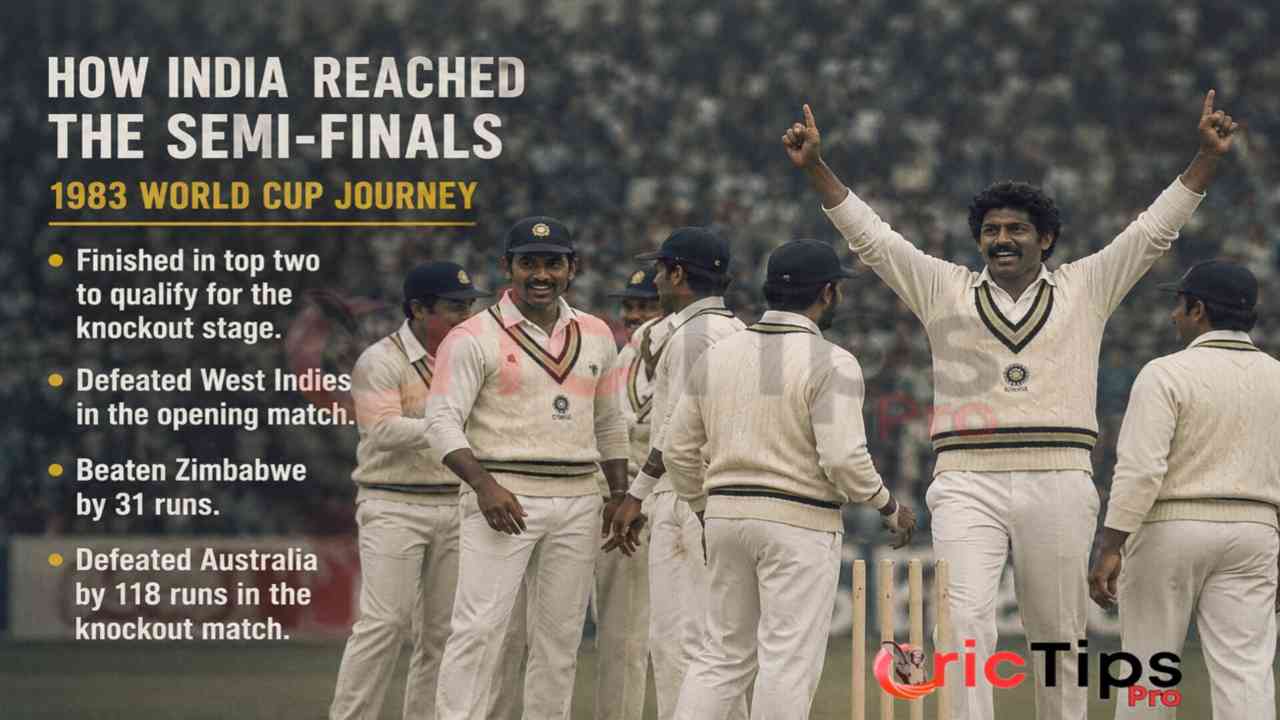
India’s journey to the semi-finals of the 1983 World Cup was a story of determination, belief, and remarkable comebacks. Placed in a tough group alongside the West Indies, Australia, and Zimbabwe, India needed to finish in the top two to qualify for the knockout stage. It was not an easy task, but the team rose to the challenge when it mattered most.
India made a strong start by defeating the two-time defending champions, the West Indies, in their opening match. They followed it up with another important win against Zimbabwe, putting themselves in a good position early in the tournament. However, heavy defeats against Australia and the West Indies in the return fixture made their path to the semi-finals much more difficult.
The turning point came in the crucial match against Zimbabwe. India found themselves in deep trouble at 17 for 5, with their World Cup hopes hanging by a thread. At that moment, captain Kapil Dev produced one of the greatest innings in cricket history, scoring an unbeaten 175 runs. His incredible knock guided India to a total of 266 and helped secure a vital 31-run victory. More importantly, it gave the team the confidence and belief that they could overcome any challenge.
India then faced Australia in a virtual knockout match for a place in the semi-finals. The team delivered an outstanding all-round performance, posting a competitive total before the bowlers dismantled the Australian batting lineup for just 129 runs. The convincing 118-run victory secured India’s place in the last four of the tournament.
In the semi-final of the 1983 Cricket World Cup, India faced hosts England. England scored 213 runs, but India chased down the target with confidence and control. Mohinder Amarnath and Yashpal Sharma played important innings, helping India secure a comfortable six-wicket victory. With that win, India reached their first-ever World Cup final and moved one step closer to creating history. It was a moment that marked the beginning of a new era for Indian cricket.
India vs England Semi-Final: The Road to Lord’s
Before reaching the World Cup final, India had to overcome one more major challenge: the host nation, England. The semi final was played at Old Trafford on June 22, 1983, and it was a huge opportunity for Kapil Dev’s team to create history. India had already surprised the cricket world by defeating the mighty West Indies in the group stage. They had also survived a difficult moment against Zimbabwe, thanks to Kapil Dev’s unforgettable unbeaten 175. A convincing win over Australia then secured their place in the semi-finals. But to reach the final, they still had to get past a strong England side playing at home.
England won the toss and chose to bat first. Their innings started well, but the Indian bowlers slowly took control of the game. Mohinder Amarnath played a key role by taking important wickets and putting pressure on the English batting lineup. Kirti Azad also bowled with great discipline and picked up a crucial wicket. Later, captain Kapil Dev cleaned up the lower order, helping bowl England out for 213 runs. Although England looked comfortable at one stage, India’s bowlers never allowed them to build a match-winning total.
Chasing 214, India showed maturity and confidence. The batsmen stayed calm and never looked under pressure. Mohinder Amarnath and Yashpal Sharma played valuable innings and guided the team closer to victory. India eventually reached the target with six wickets in hand and booked their place in the World Cup final for the first time in their history.
This victory was about more than just winning a semi-final. It showed how far the team had come during the tournament. In the 1983 Cricket World Cup, India had gone from being underdogs to becoming serious title contenders. The win at Old Trafford sent them to the famous Lord’s Cricket Ground, where one final challenge stood between them and cricket immortality.
India vs West Indies Final: Match Highlights and Turning Points
June 25, 1983, at Lord’s Cricket Ground was a day that changed Indian cricket forever. Very few people believed India could defeat the mighty West Indies, who had won the previous two World Cups and were considered the strongest team in the world. However, cricket is a game full of surprises, and the final of the 1983 Cricket World Cup produced one of the greatest upsets in sports history.
Batting first, India struggled against the fearsome West Indies pace attack of Andy Roberts, Joel Garner, Malcolm Marshall, and Michael Holding. Runs were difficult to score, and wickets fell regularly. Krishnamachari Srikkanth played a valuable innings of 38 runs, while Sandeep Patil scored 27 and Mohinder Amarnath added an important 26. Their efforts helped India reach 183 runs. It was not a big total, and most people expected the West Indies to chase it comfortably.
But India had other plans. From the beginning of the chase, the Indian bowlers and fielders applied constant pressure. Viv Richards looked dangerous and was scoring quickly, appearing ready to take the match away from India. Then came the moment that changed everything. Richards played a high shot off Madan Lal’s bowling, and captain Kapil Dev ran a long distance backward to take a brilliant catch. It remains one of the most famous catches in cricket history and completely changed the momentum of the match.
Soon after, Madan Lal dismissed West Indies captain Clive Lloyd, putting the defending champions under even more pressure. Mohinder Amarnath then produced a superb bowling spell, taking three important wickets. He also claimed the final wicket of the match, helping bowl the West Indies out for just 140 runs.
India won by 43 runs and achieved one of the most memorable victories in cricket history. The 1983 Cricket World Cup triumph was more than just a tournament win. It inspired millions of people, transformed Indian cricket, and marked the beginning of a new era for the sport in India. Even today, that famous victory at Lord’s remains one of the greatest moments in cricket history.
The Legacy of India’s 1983 World Cup Triumph and Its Impact on Cricket
India’s victory in the 1983 Cricket World Cup was much more than winning a cricket tournament. It was a moment that changed the future of Indian cricket forever. When Kapil Dev and his team defeated the powerful West Indies at Lord’s, they shocked the cricket world and gave millions of Indians a reason to dream bigger. The victory showed that India could compete with and defeat the best teams in the world.
Before 1983, England was seen as the center of world cricket, and India was rarely considered a serious title contender. However, after winning the World Cup, things began to change quickly. Cricket officials and businesses realized the huge potential of the game in India and across South Asia. As a result, the 1987 World Cup was held in India and Pakistan, becoming the first World Cup played outside England. It was a major step in the growth of the sport.
The win also changed the business side of cricket. The popularity of the game increased rapidly, bringing more television coverage, sponsorship deals, and investment into the sport. Over time, the Board of Control for Cricket in India (BCCI) became one of the most powerful organizations in world cricket. This growth eventually helped create major tournaments like the Indian Premier League (IPL), which changed the financial side of cricket around the world.
Most importantly, the victory inspired an entire generation. The success of the 1983 Cricket World Cup encouraged countless young people to pick up a bat and ball and dream of playing for their country. Players like Kapil Dev, Mohinder Amarnath, and Krishnamachari Srikkanth became role models for millions of fans. Cricket was no longer just a game; it became a source of pride, passion, and national identity.
Even today, many people consider the 1983 World Cup victory to be one of the most important moments in Indian sports history. It did not just bring home a trophy it gave Indian cricket a new level of confidence, a stronger place in world cricket, and a legacy that continues to inspire future generations.
Who won the 1983 Cricket World Cup?
India won the 1983 Cricket World Cup by defeating the West Indies by 43 runs in the final at Lord’s.
Who was the captain of India in the 1983 Cricket World Cup?
Kapil Dev captained India and led the team to its first-ever World Cup title.
Why is Kapil Dev’s 175 against Zimbabwe so famous?
His unbeaten 175 rescued India from 17/5 and kept their World Cup campaign alive.
Where was the 1983 Cricket World Cup Final played?
The final was played at Lord’s Cricket Ground in London, England, on June 25, 1983.
Why is the 1983 Cricket World Cup considered historic?
India’s unexpected victory over the dominant West Indies transformed Indian cricket and inspired future generations.